

Best Places to Visit in Croatia: Top Destinations for an Unforgettable Trip
Croatia is one of Europe’s most appealing travel destinations, offering a wonderful combination of historic cities, beautiful beaches, scenic islands, national parks, and traditional coastal villages. Located along the Adriatic Sea, this southeastern European country attracts visitors with its clear blue water, charming architecture, impressive natural landscapes, and rich cultural heritage.
Whether you enjoy exploring ancient streets, relaxing beside the sea, hiking through forests, or discovering local food, Croatia offers experiences for different types of travelers. From the famous city walls of Dubrovnik to the waterfalls of Plitvice Lakes National Park, every destination has something special to offer.
Choosing where to go can be challenging because Croatia has so many interesting places to explore. Some destinations are ideal for history lovers, while others are better suited to beach holidays, outdoor adventures, or peaceful island escapes.
In this guide, we will explore the best places to visit in Croatia, including popular cities, beautiful islands, natural attractions, and practical travel tips. This information will help you understand what makes each destination special and plan a memorable Croatian holiday.
Why Visit Croatia?
Croatia offers a variety of travel experiences within a relatively compact country. You can explore historic towns, visit national parks, enjoy coastal scenery, and discover traditional villages without needing to travel enormous distances.
Beautiful Adriatic Coastline
Croatia is famous for its Adriatic coastline, which features clear water, rocky shores, pebble beaches, and picturesque seaside towns. Visitors can enjoy swimming, sailing, snorkeling, kayaking, and relaxing beside the sea. The coastline also provides access to numerous islands, each offering a different atmosphere and landscape.
Rich History and Culture
Croatia has a fascinating history influenced by Roman, Venetian, Byzantine, and Central European cultures. This heritage can be seen in its historic buildings, churches, fortresses, museums, and traditional architecture. Cities such as Dubrovnik, Split, Pula, and Trogir are especially interesting for travelers who enjoy history.
Impressive Natural Attractions
Beyond its beaches and cities, Croatia has remarkable natural scenery. Waterfalls, lakes, forests, mountains, caves, and national parks make the country attractive to nature lovers. Plitvice Lakes National Park, Krka National Park, and Paklenica National Park are among the country’s best-known outdoor destinations.
Delicious Traditional Food
Croatian cuisine varies between coastal and inland regions. Along the coast, seafood, olive oil, grilled fish, and Mediterranean ingredients are common. Inland areas offer different traditional dishes, including hearty meals, pastries, and meat-based specialties. Trying regional food is an enjoyable way to understand Croatian culture.
10 Best Places to Visit in Croatia
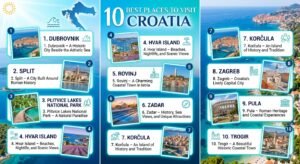
Croatia has many destinations worth exploring, but some stand out because of their history, scenery, attractions, and travel experiences. The following places are excellent starting points when planning your trip.
1. Dubrovnik – A Historic City Beside the Adriatic Sea
Dubrovnik is one of Croatia’s most recognizable destinations. Located in southern Dalmatia, this historic coastal city is famous for its impressive stone walls, red-roofed buildings, narrow streets, and beautiful sea views.
The Old City of Dubrovnik is a UNESCO World Heritage Site. Walking through its historic streets allows visitors to discover centuries-old architecture, churches, squares, and traditional shops.
One of the city’s most popular activities is walking along the historic city walls. From the walls, visitors can enjoy panoramic views of the Old Town and the Adriatic coastline.
Top attractions in Dubrovnik:
- Dubrovnik Old Town
- Historic City Walls
- Stradun, the main pedestrian street
- Rector’s Palace
- Dubrovnik Cathedral
- Fort Lovrijenac
Dubrovnik is an excellent choice for travelers interested in history, architecture, photography, and coastal scenery. However, the city can become crowded during the summer months, so visiting early in the morning or during the shoulder seasons can provide a more relaxed experience.
2. Split – A City Built Around Roman History
Split is another major destination on Croatia’s Dalmatian coast. It is especially famous for Diocletian’s Palace, an impressive Roman complex that forms an important part of the city’s historic center.
Unlike many ancient monuments that stand separately from modern life, Diocletian’s Palace is closely connected to the everyday atmosphere of Split. Restaurants, shops, homes, and small streets can be found within and around its historic structures.
Visitors can explore the palace’s courtyards, discover historic buildings, and enjoy the lively waterfront promenade known as the Riva.
Top attractions in Split:
- Diocletian’s Palace
- Peristyle Square
- Cathedral of Saint Domnius
- Riva Waterfront
- Marjan Hill
- Bačvice Beach
Split is also a convenient starting point for exploring nearby islands, including Hvar and Brač. It is a good destination for travelers who want a combination of history, beaches, restaurants, and island excursions.
3. Plitvice Lakes National Park – A Natural Paradise
Plitvice Lakes National Park is one of Croatia’s most remarkable natural attractions. Located in the country’s central region, the park is known for its interconnected lakes, waterfalls, forest landscapes, and wooden walking paths.
The park contains a series of lakes connected by waterfalls and natural water channels. The water can appear in different shades of blue and green depending on sunlight, minerals, vegetation, and other natural conditions.
Visitors can follow marked walking routes and wooden boardwalks to enjoy views of the lakes and waterfalls. Different routes are available, allowing travelers to choose an experience based on their available time and physical ability.
What makes Plitvice Lakes special?
- Beautiful interconnected lakes
- Numerous waterfalls
- Forest scenery and wildlife
- Wooden walking paths
- Photography opportunities
- Seasonal changes in natural colors
Plitvice Lakes is particularly attractive during spring and autumn, when the landscape can be especially beautiful and visitor numbers may be lower than during peak summer periods.
One important point to remember is that swimming is not permitted in the park’s lakes. Visitors should follow the park’s walking routes and conservation rules to help protect this sensitive natural environment.
4. Hvar Island – Beaches, Nightlife, and Scenic Views
Hvar is one of Croatia’s best-known islands, located in the Adriatic Sea. It attracts visitors with its sunny weather, historic architecture, beautiful beaches, and lively atmosphere.
Hvar Town is the island’s most famous settlement. Its historic harbor, stone streets, waterfront restaurants, and surrounding hills create an attractive setting for visitors.
The island also offers quieter villages, hidden coves, and scenic countryside. Travelers who prefer outdoor activities can explore walking trails, enjoy boat excursions, or visit nearby islands.
Top attractions and experiences in Hvar:
- Hvar Town
- Fortica Fortress
- St. Stephen’s Square
- Pakleni Islands
- Coastal swimming spots
- Local restaurants and waterfront cafes
Hvar is particularly popular during summer, when its nightlife and beach atmosphere attract international visitors. Travelers looking for a quieter experience may prefer spring or early autumn.
5. Rovinj – A Charming Coastal Town in Istria
Rovinj is a beautiful seaside town located on Croatia’s Istrian Peninsula. It is known for its colorful buildings, narrow cobblestone streets, fishing heritage, and attractive waterfront.
The Old Town is built on a small peninsula, creating a distinctive appearance when viewed from the surrounding coast. Visitors can wander through its narrow streets, explore local shops, and enjoy traditional restaurants.
The Church of St. Euphemia is one of Rovinj’s most recognizable landmarks. Its location on a hill provides lovely views over the town and the Adriatic Sea.
Top attractions in Rovinj:
- Rovinj Old Town
- Church of St. Euphemia
- Grisia Street
- Rovinj Harbor
- Punta Corrente Forest Park
- Nearby coastal beaches
Rovinj is a great choice for couples, photographers, and travelers who enjoy relaxed coastal towns. It is also an excellent place to experience Istrian food and explore the surrounding countryside.
6. Zadar – History, Sea Views, and Unique Attractions
Zadar is a historic city on Croatia’s northern Dalmatian coast. It combines ancient architecture with modern attractions and a relaxed seaside atmosphere.
The city’s historic center contains Roman ruins, medieval churches, old stone streets, and attractive public squares. Visitors can explore the area on foot and discover different layers of its history.
Two of Zadar’s most distinctive attractions are the Sea Organ and the Greeting to the Sun. The Sea Organ uses the movement of waves to produce musical sounds through a system of pipes beneath the waterfront steps. The nearby Greeting to the Sun installation uses solar energy to create an illuminated display after sunset.
Top attractions in Zadar:
- Sea Organ
- Greeting to the Sun
- Roman Forum
- Church of St. Donatus
- Zadar Old Town
- Kalelarga Street
Zadar is a suitable destination for travelers interested in history, photography, waterfront walks, and unusual cultural attractions.
7. Korčula – An Island of History and Tradition
Korčula is an island in southern Dalmatia known for its historic town, traditional culture, and beautiful coastal surroundings.
Korčula Town is particularly attractive because of its stone buildings, narrow streets, historic churches, and defensive walls. Its old streets have a distinctive layout, and visitors can explore the town at a comfortable pace.
The island is also known for traditional performances, including the Moreška sword dance, which is an important part of local cultural heritage. Beyond the main town, Korčula offers beaches, vineyards, small villages, and scenic coastal roads.
Top attractions in Korčula:
- Korčula Old Town
- St. Mark’s Cathedral
- Moreška sword dance
- Lumbarda village
- Local vineyards
- Coastal swimming areas
Korčula is an excellent destination for travelers who want to combine cultural experiences with a peaceful island holiday.
8. Zagreb – Croatia’s Lively Capital City
Zagreb is the capital and largest city of Croatia. Unlike the country’s coastal destinations, Zagreb offers a more Central European atmosphere, with historic squares, museums, parks, cafes, and impressive architecture.
The city is divided into different areas, including the historic Upper Town and the more modern Lower Town. Both areas provide interesting experiences for visitors.
The Upper Town is particularly popular for its historic streets and landmarks. St. Mark’s Church is famous for its colorful roof, while the Stone Gate is an important historic and religious site.
Top attractions in Zagreb:
- Ban Jelačić Square
- St. Mark’s Church
- Zagreb Cathedral
- Stone Gate
- Lotrščak Tower
- Museum of Broken Relationships
Zagreb is a good choice for travelers who enjoy museums, local markets, architecture, and city life. It is also a useful starting point for exploring other parts of inland Croatia.
9. Pula – Roman Heritage and Coastal Experiences
Pula is an important historic city located in the southern part of the Istrian Peninsula. It is best known for its impressive Roman amphitheater, commonly called the Pula Arena.
The arena is one of the city’s most famous landmarks and a reminder of the region’s Roman past. Visitors can explore the ancient structure and learn about its historical importance. Pula also offers a pleasant combination of cultural attractions, local restaurants, coastal scenery, and nearby beaches.
Top attractions in Pula:
- Pula Arena
- Temple of Augustus
- Arch of the Sergii
- Pula Old Town
- Historical museums
- Nearby beaches and coastal areas
Pula is an excellent destination for history enthusiasts and travelers who want to explore the cultural attractions of Istria while enjoying access to the Adriatic coast.
10. Trogir – A Beautiful Historic Coastal Town
Trogir is a small historic town located near Split. Its old center sits on a small island between the mainland and the island of Čiovo.
The town is known for its preserved medieval streets, historic buildings, stone squares, and waterfront views. Its historic center is recognized as a UNESCO World Heritage Site.
One of the most important landmarks is the Cathedral of St. Lawrence, which is famous for its impressive architecture and detailed entrance portal.
Top attractions in Trogir:
- Trogir Old Town
- Cathedral of St. Lawrence
- Kamerlengo Fortress
- Trogir Waterfront
- Town Hall
- Historic stone streets
Trogir is a wonderful destination for travelers who enjoy architecture, history, and relaxed coastal surroundings. It can also be visited as a day trip from Split.
Best Natural Attractions to Explore in Croatia
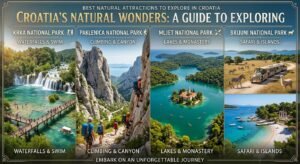
Croatia is not only famous for its historic cities and beaches. Its national parks and protected landscapes provide opportunities to experience some of the country’s most beautiful natural environments.
Krka National Park
Krka National Park is known for its waterfalls, river landscapes, walking paths, and natural scenery. The park follows the Krka River and contains several impressive waterfalls, including Skradinski Buk.
Visitors can explore designated trails, enjoy viewpoints, and learn about the area’s natural and cultural heritage. Entry arrangements and visitor rules may differ between park locations, so it is sensible to check current conditions before visiting.
Paklenica National Park
Paklenica National Park is located near the Velebit mountain range. It is especially popular with hikers and rock climbers because of its dramatic limestone landscapes and deep canyons.
The park’s two main canyons, Velika Paklenica and Mala Paklenica, provide opportunities to explore mountain scenery and natural trails. Visitors should choose routes according to their fitness level and check weather conditions before setting out.
Mljet National Park
Mljet National Park covers the western part of Mljet Island. It is known for its forested landscape and two saltwater lakes, Veliko Jezero and Malo Jezero.
The park offers walking and cycling opportunities, peaceful waterfront views, and access to the small islet of St. Mary, where a historic monastery stands. Mljet is particularly appealing to visitors who want to enjoy nature away from busier tourist destinations.
Brijuni National Park
Brijuni National Park is an island group off the coast of Istria. The area combines natural scenery with archaeological and historical attractions.
Visitors can explore parts of the archipelago through organized excursions. The islands are known for their green landscapes, coastal views, and cultural heritage. It is a good option for travelers staying in Istria who want to experience a different side of Croatia.
Best Beaches and Islands in Croatia
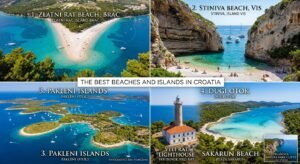
Croatia’s islands and beaches are among the main reasons travelers visit the country. The coastline offers a variety of swimming spots, from busy resort beaches to quieter coves.
Zlatni Rat Beach, Brač
Zlatni Rat is one of Croatia’s most recognizable beaches. Located near the town of Bol on Brač Island, it is known for its distinctive pointed shape extending into the sea.
The beach is made of small pebbles, and its shape can change slightly depending on wind and sea currents. Visitors can enjoy swimming, sunbathing, and water sports.
Stiniva Beach, Vis
Stiniva Beach is a small and scenic cove on Vis Island. It is surrounded by high rocky cliffs that create a narrow entrance to the sea.
Visitors can reach the beach by boat or by following a steep walking path. Because access can be challenging, it is important to wear suitable footwear and consider sea and weather conditions.
Pakleni Islands
The Pakleni Islands are a group of small islands near Hvar. They are popular for boat trips, swimming, snorkeling, and exploring quiet coastal areas. Some locations offer restaurants and beach facilities, while others provide a more peaceful natural setting.
Dugi Otok
Dugi Otok is an island known for its natural scenery and coastal landscapes. Sakarun Beach is one of its best-known swimming areas, recognized for its light-colored sand and clear water. The island also offers quiet villages, scenic viewpoints, and access to Telašćica Nature Park.
Top Things to Do in Croatia
Croatia offers more than sightseeing. Visitors can enjoy a range of activities depending on their interests, travel style, and destination.
Explore Historic Old Towns
Walking through historic towns is one of the best ways to experience Croatia. Dubrovnik, Split, Rovinj, Korčula, and Trogir all offer beautiful streets, historic buildings, and local cultural experiences.
Enjoy Boat Trips and Island Hopping
Boat excursions allow visitors to discover coastal scenery and islands that may be difficult to reach by road. Popular areas for island trips include Split, Hvar, Zadar, and Dubrovnik. Before booking, check the departure point, journey duration, weather conditions, and whether the trip includes enough time at each stop.
Try Water Sports
Croatia’s coastline provides opportunities for swimming, snorkeling, kayaking, sailing, and paddleboarding. Some destinations also offer windsurfing and diving experiences. Beginners should choose activities with appropriate safety equipment and qualified instructors.
Discover Croatian Food
Food is an important part of the travel experience. Coastal regions are known for seafood, grilled fish, olive oil, and Mediterranean-style dishes. Some traditional foods worth trying include:
- Pašticada: A slow-cooked beef dish commonly associated with Dalmatia.
- Štrukli: A traditional pastry dish particularly associated with northern Croatia.
- Peka: A cooking method in which food is prepared under a covered metal or clay bell.
- Brudet: A traditional fish stew found in coastal areas.
- Pag cheese: A well-known sheep’s milk cheese from the island of Pag.
- Istrian truffles: A regional specialty used in pasta and other dishes.
Trying regional specialties can make a Croatian trip more memorable.
Go Hiking and Enjoy Outdoor Adventures
Travelers who enjoy outdoor activities can explore Croatia’s mountains, forests, national parks, and coastal trails.
Paklenica is popular for hiking and climbing, while Plitvice Lakes offers marked walking routes through a beautiful lake and waterfall landscape. Always select a route that matches your experience and check local safety guidance.
Best Time to Visit Croatia
The best time to visit Croatia depends on what you want to experience. Weather, visitor numbers, accommodation prices, and seasonal activities can vary throughout the year.
Spring: March to May
Spring is a pleasant season for exploring cities, historic towns, and national parks. Temperatures gradually become warmer, and landscapes become greener.
It can be a good time for sightseeing and outdoor activities without the busiest summer crowds. However, sea temperatures may still be cool for swimming, especially early in the season.
Summer: June to August
Summer is the busiest travel season in Croatia. Coastal destinations become lively, beaches attract large numbers of visitors, and island excursions are widely available.
This season is suitable for travelers who want warm weather, swimming, sailing, and nightlife. However, popular places can become crowded, and accommodation prices are often higher.
Autumn: September to November
Early autumn is an attractive time to visit Croatia. September can still offer warm coastal weather, while visitor numbers often begin to decrease after the summer peak.
October and November are generally better suited to city sightseeing, regional food experiences, and exploring inland areas. Weather conditions become cooler and less predictable as the season progresses.
Winter: December to February
Winter is quieter in many coastal destinations, but Zagreb and other cities continue to offer cultural attractions, museums, restaurants, and seasonal events.
Travelers looking for a peaceful city break may enjoy this period. However, some seasonal island services and tourist facilities may operate on reduced schedules.
Read more: Uploadwords. com Overview: Purpose, Features, and Main Uses
Travel Tips for Planning Your Croatia Trip
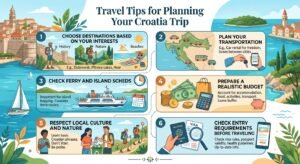
Good planning can help you make the most of your time in Croatia. Before booking your holiday, consider the following practical tips.
Choose Destinations Based on Your Interests
Not every destination offers the same experience. Dubrovnik and Split are excellent for history and coastal culture, while Plitvice Lakes is ideal for nature lovers.
Hvar and Brač are attractive for island experiences, and Zagreb is a good choice for city sightseeing. Instead of trying to visit every location, select destinations that match your interests and available travel time.
Plan Your Transportation
Croatia has several transportation options, including buses, ferries, catamarans, trains, and rental cars.
Buses are commonly used for travel between cities. Ferries and catamarans connect many coastal towns with nearby islands. Rail services are available on selected routes, although the railway network is more limited along parts of the coast.
A rental car can be useful for exploring rural areas and smaller towns, but parking in historic centers may be limited or expensive.
Check Ferry and Island Schedules
If you plan to visit islands such as Hvar, Brač, Korčula, or Mljet, check transportation schedules before finalizing your accommodation. Ferry frequency can change depending on the season and route. Booking ahead may be helpful during busy summer periods.
Prepare a Realistic Budget
Travel costs depend on the season, destination, accommodation type, transportation, and personal spending habits.
Popular coastal cities and islands can be more expensive during summer. Travelers who want to manage costs can consider visiting during spring or early autumn, staying outside the busiest historic centers, and comparing transportation options.
Respect Local Culture and Nature
Croatia’s historic sites, national parks, and coastal environments deserve care and respect. Follow local rules, avoid leaving rubbish, stay on marked paths in protected areas, and respect historic buildings and religious sites. When visiting beaches, check local conditions and follow safety guidance.
Check Entry Requirements Before Traveling
Croatia is a member of the European Union and part of the Schengen Area. Entry requirements depend on your nationality, travel documents, and purpose of travel.
Before departure, check the latest visa and passport requirements that apply to you. Also review travel insurance, accommodation arrangements, and any relevant transportation information.
Final Thoughts
Croatia is a destination where history, natural beauty, island life, and coastal culture come together. From the historic streets of Dubrovnik and the Roman heritage of Split to the waterfalls of Plitvice Lakes and the beaches of Hvar and Brač, the country offers a wide variety of memorable travel experiences.
The best places to visit in Croatia depend on your interests, budget, and available time. History lovers may prefer Dubrovnik, Split, and Trogir, while nature enthusiasts can explore Plitvice Lakes, Krka, and Paklenica. Travelers looking for beaches and island experiences may enjoy Hvar, Korčula, Vis, or Brač.
You do not need to visit every destination to enjoy Croatia. Choosing a few places that match your travel style and allowing enough time to explore them can create a more rewarding holiday.
FAQs About the Best Places to Visit in Croatia
1. What are the best places to visit in Croatia for first-time travelers?
Dubrovnik, Split, Plitvice Lakes National Park, Hvar, and Zagreb are excellent choices for first-time visitors. These destinations provide a combination of historic attractions, natural scenery, beaches, and cultural experiences.
2. How many days are enough to explore Croatia?
Around seven to ten days can provide enough time to explore several major destinations, such as Split, Dubrovnik, and one or two nearby islands.
3. What is the best month to visit Croatia?
May, June, September, and early October can be excellent months to visit Croatia. These periods often offer a balance between pleasant weather and fewer visitors than the busiest summer months.
4. Is Croatia suitable for family vacations?
Yes. Croatia offers historic towns, beaches, boat excursions, nature parks, and family-friendly activities. Families should choose accommodation and excursions based on children’s ages, accessibility needs, and travel preferences.
5. Which Croatian islands are worth visiting?
Hvar, Brač, Korčula, Vis, Mljet, and Dugi Otok are among the islands worth considering. Each offers a different experience, including historic towns, beautiful beaches, nature parks, and quiet coastal villages.


