

Wedding Tuxedo for Men The Ultimate Guide to Timeless Elegance and Modern Wedding Style
A wedding tuxedo for men is more than just formal attire .it’s a symbol of sophistication, celebration, and personal style. Whether you’re the groom, best man, or a guest attending a black-tie wedding, the right tuxedo elevates your presence and creates unforgettable memories. From classic black-tie traditions to modern fashion-forward interpretations, choosing the perfect wedding tuxedo requires understanding fabrics, fits, styling details, and accessories.
This comprehensive guide explores everything you need to know about wedding tuxedos for men from history and style options to tailoring tips and coordination strategies helping you look confident and refined on one of life’s most important occasions.
The History and Significance of the Wedding Tuxedo for Men
The tuxedo has long been associated with elegance and high society. Its origins trace back to the late 19th century, when British aristocrats popularized a more relaxed version of formal tailcoats. Over time, the tuxedo became the gold standard for evening wear, famously embodied by suave icons like James Bond, whose sleek black tuxedo became synonymous with timeless masculinity.
Today, wedding tuxedos blend tradition with personalization. While the classic black tux remains a staple, modern grooms experiment with colors, textures, and silhouettes that reflect their personality and wedding theme.
Understanding the Key Components of a Wedding Tuxedo
A wedding tuxedo is composed of several essential elements that work together to create a polished look:
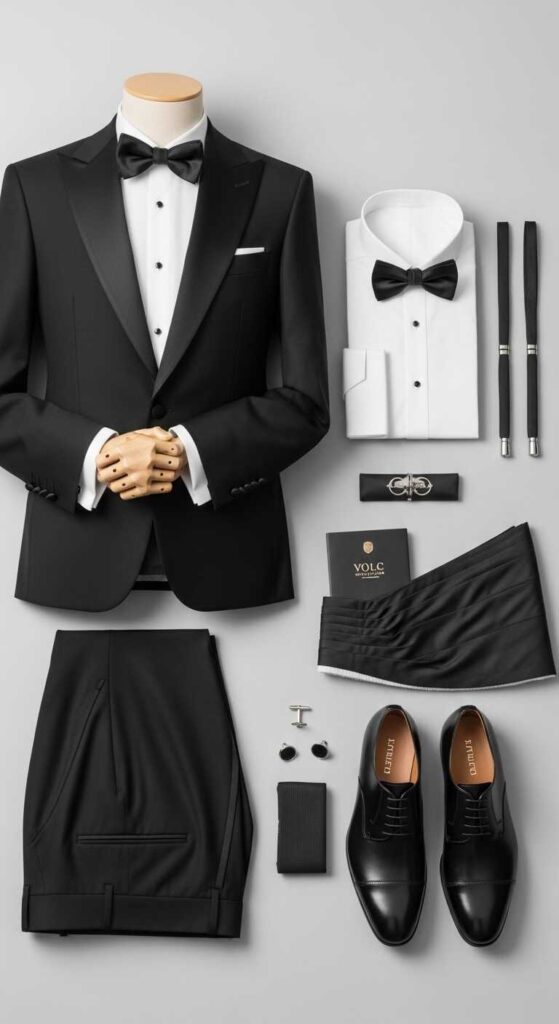
Tuxedo Jacket
The jacket defines the tuxedo’s character. Key features include:
- Satin or grosgrain lapels (shawl, peak, or notch styles)
- Structured shoulders for a clean silhouette
- Single or double-button closures
Shawl lapels provide a smooth, rounded elegance, while peak lapels add a bold, powerful presence. The choice depends on personal style and body proportions.
Tuxedo Trousers
Tuxedo trousers are distinguished by a satin stripe running along the outer seam. They are typically worn without belt loops and paired with suspenders for a sleek waistline.
Dress Shirt
A crisp white dress shirt complements the tuxedo. Popular options include:
- Pleated bib shirts
- Marcella bib shirts
- Plain front formal shirts
French cuffs with cufflinks add a refined finishing touch.
Waist Coverings
Cummerbunds or waistcoats conceal the waistband and enhance the tuxedo’s symmetry. Waistcoats create a tailored, layered effect, while cummerbunds maintain minimalist elegance.
Classic Wedding Tuxedo Styles
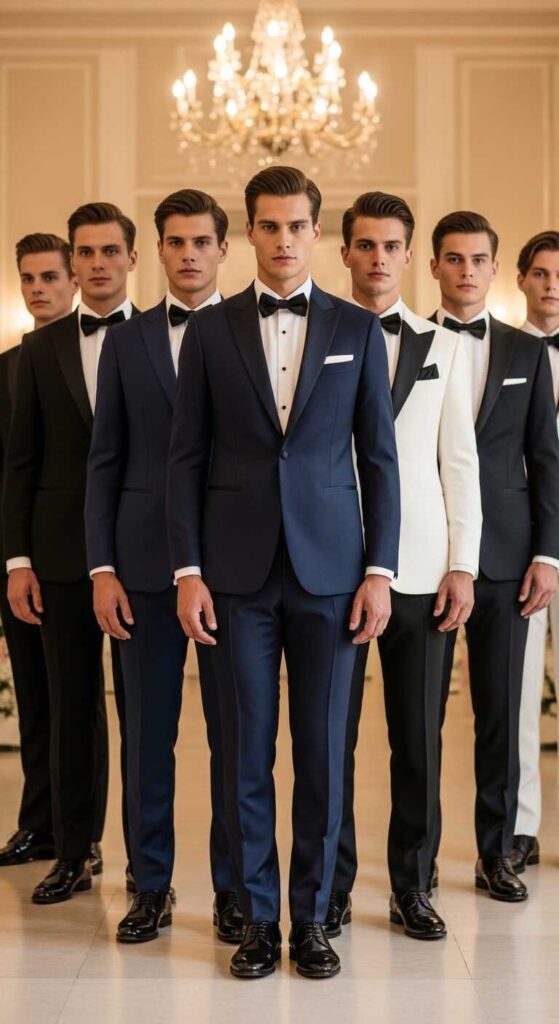
Traditional Black Tuxedo
The black tuxedo remains the ultimate symbol of formalwear. It pairs effortlessly with a white shirt and black bow tie, creating a timeless aesthetic suitable for evening weddings.
Midnight Blue Tuxedo
Midnight blue tuxedos appear richer under artificial lighting and offer a subtle twist on tradition. This option is especially popular for formal indoor ceremonies.
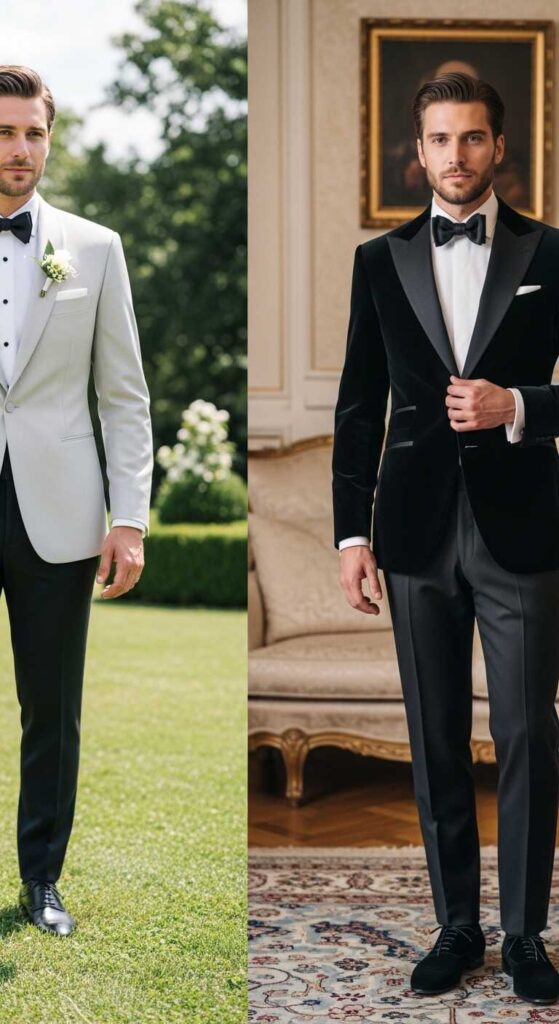
White Dinner Jacket
Perfect for warm-weather or destination weddings, the white dinner jacket contrasts elegantly with black trousers. It delivers a sophisticated yet relaxed vibe.
Modern Wedding Tuxedo Trends
Contemporary fashion has expanded tuxedo options beyond traditional black and white. Grooms increasingly embrace:
- Velvet tuxedo jackets in deep jewel tones
- Textured fabrics such as jacquard and brocade
- Slim and tailored silhouettes
- Patterned linings and custom embroidery
These modern adaptations allow men to express individuality while maintaining formal elegance.
Choosing the Right Fit for Your Body Type
Fit is the most critical factor in achieving a sharp tuxedo look. There are three primary fits:
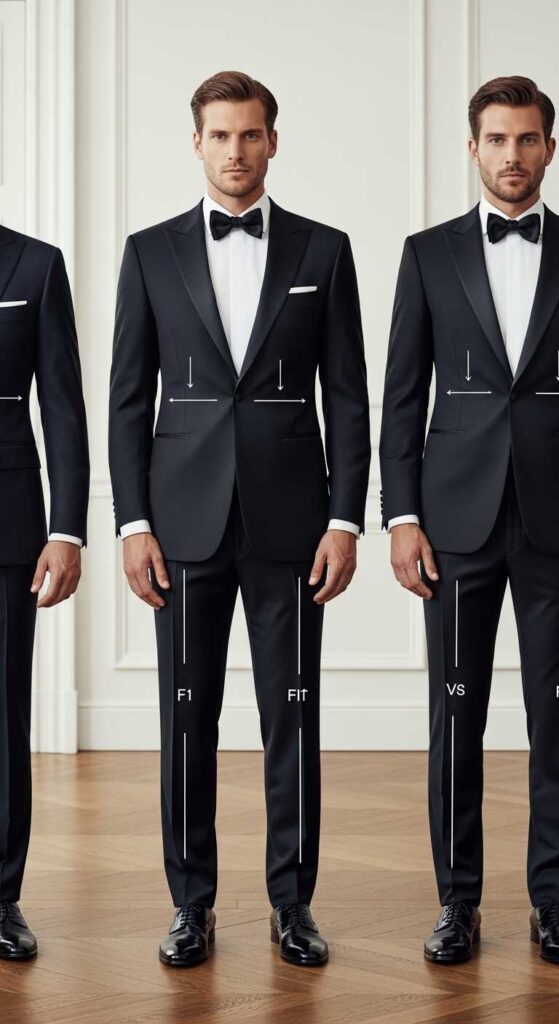
Classic Fit
Offers comfort and room through the chest and waist. Ideal for traditional styling and broader body types.
Slim Fit
Provides a streamlined silhouette with tapered trousers and a closer jacket cut. Popular among modern grooms seeking a sleek appearance.
Tailored Fit
Balances comfort and structure, delivering a refined shape without excessive tightness.
Expert tailoring often associated with renowned tailoring districts like Savile Row ensures the tuxedo contours perfectly to the wearer’s frame.
Fabric Selection for Wedding Tuxedos
The fabric influences both appearance and comfort:
Wool: Breathable and versatile for year-round wear
Velvet: Luxurious and ideal for evening or winter weddings
Linen blends: Suitable for summer ceremonies
Silk accents: Add subtle sheen and elegance
Choosing high-quality materials enhances durability and visual appeal.
Color Coordination and Wedding Themes
A wedding tuxedo should harmonize with the overall theme and color palette. Popular color strategies include:
- Matching accent colors with bridal party attire
- Complementing venue aesthetics
- Seasonal palettes (deep hues for fall/winter, lighter tones for spring/summer)
Neutral tuxedos provide flexibility, while bold colors create memorable statements.
Essential Accessories for a Wedding Tuxedo
Accessories refine the tuxedo and add personality:
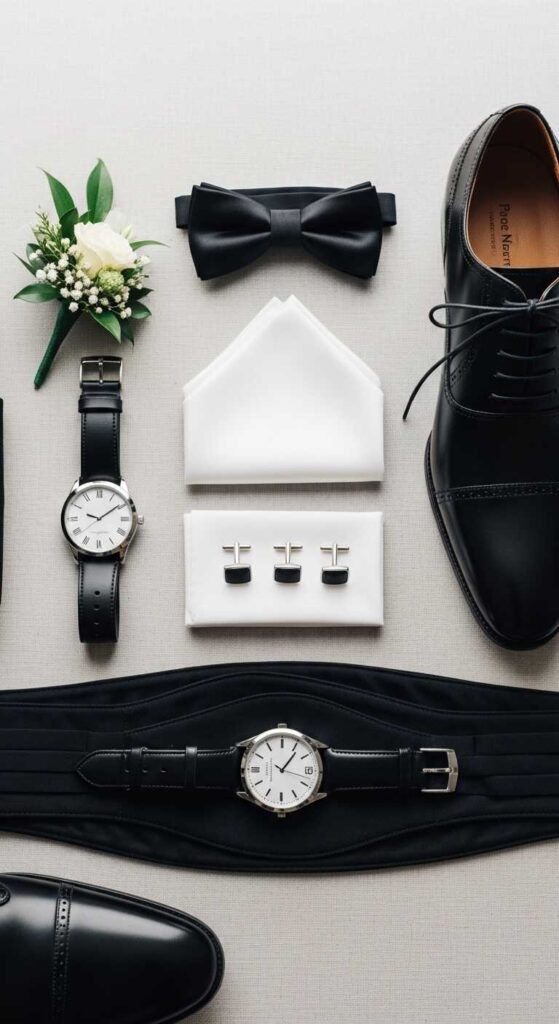
Bow Tie vs. Necktie
The bow tie is the traditional choice for tuxedos. Self-tie bow ties offer authenticity, while pre-tied options provide convenience.
Pocket Squares
A crisp white pocket square enhances sophistication. Colored or patterned squares introduce flair.
Shoes
Patent leather or highly polished Oxford shoes complete the ensemble. Clean lines and minimal detailing preserve formality.
Cufflinks and Studs
Metallic accents in silver or gold add understated luxury.
Boutonnieres
A boutonniere ties the groom’s look to the wedding bouquet and overall floral design.
Seasonal Considerations for Wedding Tuxedos
Summer Weddings
Lightweight fabrics and breathable linings prevent overheating. White or pastel jackets are popular choices.
Winter Weddings
Heavier fabrics such as velvet and wool provide warmth and richness. Dark, dramatic colors complement winter atmospheres.
Outdoor Ceremonies
Durable materials and wrinkle-resistant fabrics maintain a polished appearance throughout the event.
Groom vs. Groomsmen Tuxedo Coordination
The groom’s tuxedo should subtly stand apart while maintaining visual harmony:
- Distinct lapel styles or colors
- Unique accessories
- Personalized tailoring
Groomsmen tuxedos should align with the wedding palette without overshadowing the groom.
Renting vs. Buying a Wedding Tuxedo
Renting
- Cost-effective for one-time wear
- Convenient sizing options
- Limited customization
Buying
- Long-term investment
- Tailored fit
- Greater personalization
Frequent formal event attendees benefit from purchasing a tuxedo, while occasional wearers may prefer renting.
Tailoring and Final Fittings
Professional tailoring transforms a tuxedo into a custom masterpiece. Key adjustments include:
- Sleeve length
- Trouser break
- Jacket tapering
- Shoulder alignment
Final fittings ensure comfort and confidence on the wedding day.
Grooming and Presentation
A tuxedo’s impact is amplified by thoughtful grooming:
- Clean haircut and beard trim
- Polished shoes
- Minimal fragrance
- Confident posture
Attention to detail completes the formal look.
Read More About: Long Male Hairstyles The Ultimate Guide to Style, Trends, and Grooming
Common Mistakes to Avoid
Many men unintentionally compromise their tuxedo style. Avoid:
- Wearing a regular necktie with a traditional tuxedo
- Ill-fitting jackets or trousers
- Over-accessorizing
- Ignoring dress code guidelines
Precision and restraint preserve elegance.
Personalizing Your Wedding Tuxedo
Customization allows grooms to infuse personality:
- Monogrammed linings
- Unique lapel pins
- Custom embroidery
- Signature color accents
These details create meaningful connections to the occasion.
Budget Planning for a Wedding Tuxedo
Costs vary depending on fabric, tailoring, and brand. Budget-conscious strategies include:
- Prioritizing fit over brand labels
- Renting premium accessories
- Shopping off-season sales
Investing wisely ensures style without overspending.
Cultural and Regional Influences
Wedding attire reflects cultural traditions worldwide. Some ceremonies incorporate:
- Traditional garments alongside tuxedos
- Regional fabrics and patterns
- Symbolic accessories
Blending modern tuxedos with cultural heritage creates distinctive ensembles.
The Psychological Impact of Wearing a Tuxedo
A well-fitted tuxedo boosts confidence and presence. Studies in fashion psychology suggest that formal attire influences posture, behavior, and self-perception. On a wedding day, this confidence translates into poise and memorable photographs.
Sustainability and Ethical Fashion
Eco-conscious grooms increasingly consider sustainable options:
- Renting to reduce waste
- Choosing ethically produced fabrics
- Supporting responsible tailoring practices
Sustainable choices align style with environmental awareness.
Preparing for the Wedding Day
Final preparation ensures a flawless appearance:
- Steam or press the tuxedo
- Lay out accessories in advance
- Schedule extra time for dressing
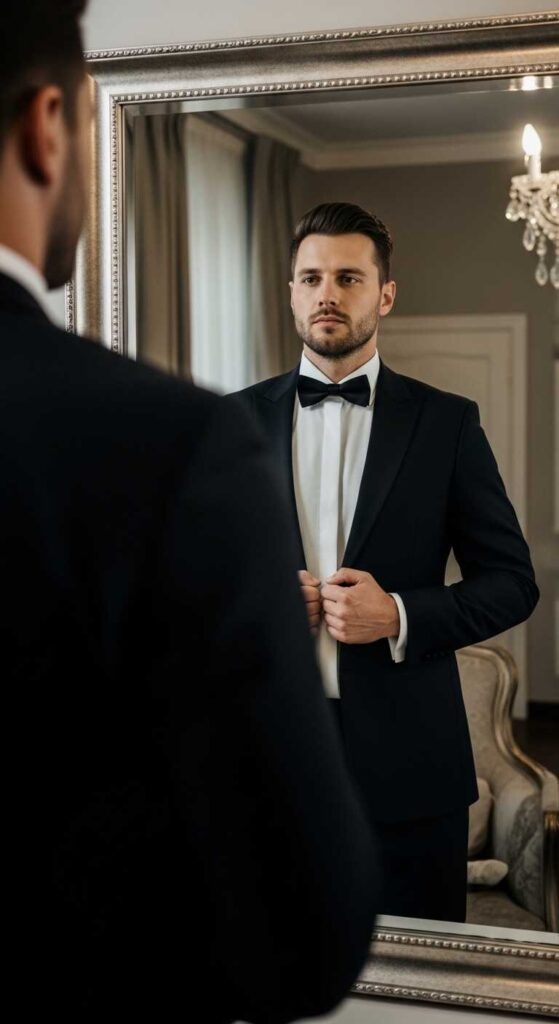
- Conduct a final mirror check
Organization minimizes stress and enhances enjoyment.
Read More About: Men Business Casual Outfits The Complete Guide to Modern Professional Style
FAQs
What is the difference between a tuxedo and a suit?
The main difference lies in the details and level of formality. A tuxedo features satin accents on the lapels, buttons, and trouser stripe, making it more formal than a standard suit. Tuxedos are traditionally worn with a bow tie and formal shirt, while suits are more versatile and suitable for business or semi-formal occasions.
When should a man wear a tuxedo to a wedding?
A tuxedo is appropriate for black-tie or formal evening weddings. If the invitation specifies a black-tie dress code, a tuxedo is expected. For daytime or casual weddings, a well-tailored suit may be more appropriate.
What color tuxedo is best for a wedding?
Classic black and midnight blue are the safest and most elegant choices. However, modern weddings allow for more creativity, including white dinner jackets, charcoal, burgundy, or velvet tuxedos. The best color depends on the wedding theme, season, and personal style.
Should the groom wear a different tuxedo than the groomsmen?
Yes, the groom often wears a tuxedo that subtly stands out. This can be achieved through a different jacket color, lapel style, unique accessories, or a custom boutonniere. The goal is to distinguish the groom while maintaining visual harmony with the wedding party.
Is it better to rent or buy a wedding tuxedo?
It depends on how often you expect to wear formal attire. Renting is cost-effective for a one-time event, while buying is a good investment if you attend formal occasions regularly. Purchasing also allows for better tailoring and personalization.
How should a wedding tuxedo fit?
A tuxedo should fit snugly but comfortably. The jacket sleeves should end at the wrist bone, showing a small portion of the shirt cuff. The trousers should have a clean break at the shoe, and the jacket should contour the shoulders without pulling or sagging.
What shirt should be worn with a wedding tuxedo?
A crisp white formal dress shirt is the standard choice. Options include pleated or plain-front shirts with French cuffs. A wingtip or spread collar works well depending on whether you’re wearing a bow tie or formal neckwear.
Can you wear a necktie instead of a bow tie with a tuxedo?
Traditionally, tuxedos are paired with bow ties. While some modern styles incorporate neckties, a bow tie maintains the formal integrity of the tuxedo and is generally recommended for weddings.
What shoes should be worn with a tuxedo?
Patent leather or highly polished black Oxford shoes are the classic choice. They should be clean, sleek, and minimal in design to match the tuxedo’s formal aesthetic.
How far in advance should you get a wedding tuxedo?
Ideally, you should arrange your tuxedo 2–3 months before the wedding. This allows time for ordering, tailoring, and final fittings to ensure a perfect fit.
Can a tuxedo be worn to a daytime wedding?
Tuxedos are traditionally evening wear, but modern fashion rules are more flexible. A tuxedo can be worn to a daytime wedding if the event is formal and the dress code supports it. Otherwise, a suit may be more appropriate.
How can a groom personalize his wedding tuxedo?
Personalization options include monogrammed linings, custom embroidery, distinctive cufflinks, or colored accents that match the wedding theme. These subtle details add personality without compromising elegance.
What fabrics are best for wedding tuxedos?
Wool is the most versatile and breathable option for year-round wear. Velvet is ideal for winter weddings, while lightweight wool or linen blends work well for summer ceremonies.
Do wedding guests wear tuxedos?
Guests should follow the dress code stated on the invitation. If the wedding is black-tie, guests are expected to wear tuxedos. For formal or semi-formal weddings, a dark suit may be acceptable.
Conclusion
A wedding tuxedo for men represents the pinnacle of formal elegance. From classic black-tie traditions to contemporary styling innovations, the right tuxedo reflects personality, complements the wedding theme, and elevates the entire celebration. By focusing on fit, fabric, coordination, and thoughtful accessories, any groom or guest can achieve a sophisticated, confident look.
Choosing a wedding tuxedo is not merely about clothing it’s about honoring a milestone moment with style, intention, and timeless grace.


