

Men Business Casual Outfits The Complete Guide to Modern Professional Style
Men business casual outfits have become the modern standard for professional dressing, blending comfort, versatility, and polished style. Unlike strict formal wear, business casual allows men to express personality while maintaining a refined appearance suitable for offices, meetings, and networking events. Understanding how to master this dress code can elevate your confidence, improve your professional image, and simplify everyday wardrobe decisions.
This comprehensive guide explores everything you need to know about men business casual outfits from essential wardrobe pieces and styling principles to outfit ideas, seasonal adaptations, and expert tips for building a timeless business casual wardrobe.
Understanding Men Business Casual Style
Business casual is a dress code that sits between formal business attire and relaxed casual wear. It removes the rigidity of suits and ties while preserving a neat, professional aesthetic. The key principle of men business casual outfits is balance: polished yet comfortable, stylish yet appropriate.
In most professional environments, business casual typically includes tailored trousers or chinos, button-down shirts or polos, optional blazers or sweaters, and clean, understated footwear. The goal is to appear approachable, competent, and modern without looking overdressed or sloppy.
Business casual also adapts to company culture. A creative workplace may allow more experimentation with colors and textures, while corporate settings often favor classic neutrals and structured silhouettes. Regardless of the environment, fit and grooming remain essential pillars of business casual style.
Core Components of Men Business Casual Outfits
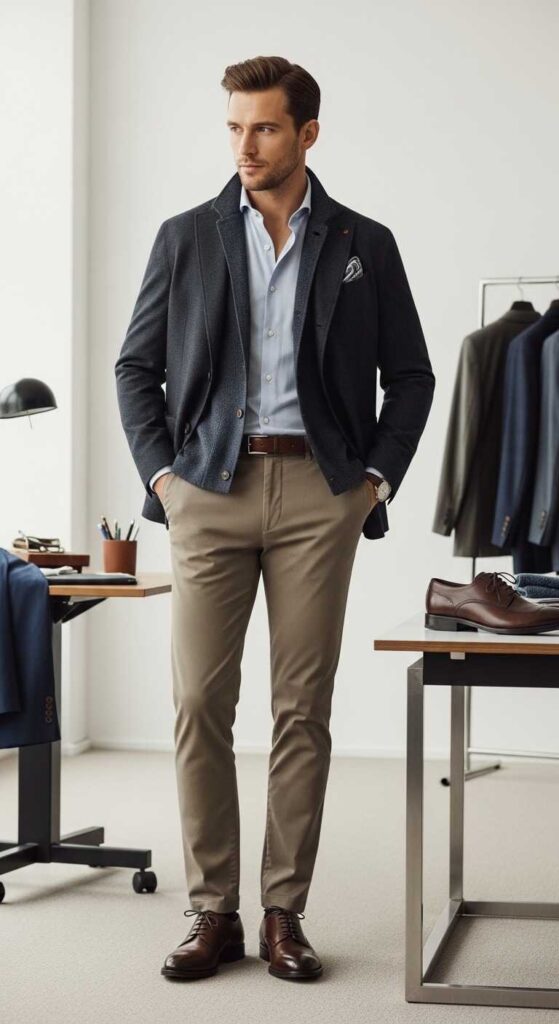
Dress Shirts and Smart Tops
A well-fitted shirt forms the foundation of most business casual outfits. Crisp button-down shirts in neutral shades like white, light blue, and gray offer maximum versatility. Subtle patterns such as stripes or checks add visual interest without overwhelming the outfit.
Polo shirts and knit tops can also fit into business casual wardrobes, especially in warmer climates. High-quality fabrics and tailored fits ensure these relaxed pieces still look professional. Layering options like lightweight sweaters or cardigans add dimension and sophistication.
Brands known for quality smart-casual shirts, such as Brooks Brothers, often emphasize craftsmanship and timeless design, which align perfectly with business casual aesthetics.
Read More About: Grunge Male Outfits The Ultimate Guide to Rebellious Style and Modern Streetwear
Trousers and Bottoms
Chinos and tailored trousers are staples of men business casual outfits. Neutral tones navy, beige, charcoal, and olive provide flexibility for mixing and matching. The fit should be slim or straight without being tight, creating a clean silhouette.
Dark denim may be acceptable in some workplaces, but it should be free of distressing or fading. The goal is to maintain a refined appearance even when incorporating casual elements.
Blazers and Outer Layers
A blazer instantly elevates any business casual look. Structured jackets in navy or gray are wardrobe essentials, pairing seamlessly with most shirts and trousers. Unstructured or soft-shouldered blazers offer a relaxed feel while preserving sharp lines.
Fashion houses like Hugo Boss are known for sleek tailoring that exemplifies modern business casual elegance.
Layering with sweaters, vests, or lightweight jackets adds texture and practicality, especially during cooler seasons.
Footwear Choices
Shoes anchor the entire outfit. Classic options include loafers, derby shoes, and minimalist leather sneakers. Neutral leather tones such as brown, black, or tan work best for professional settings.
Clean, well-maintained footwear signals attention to detail and professionalism. Even the most stylish outfit can appear careless if paired with worn or inappropriate shoes.
Color Coordination and Fabric Selection
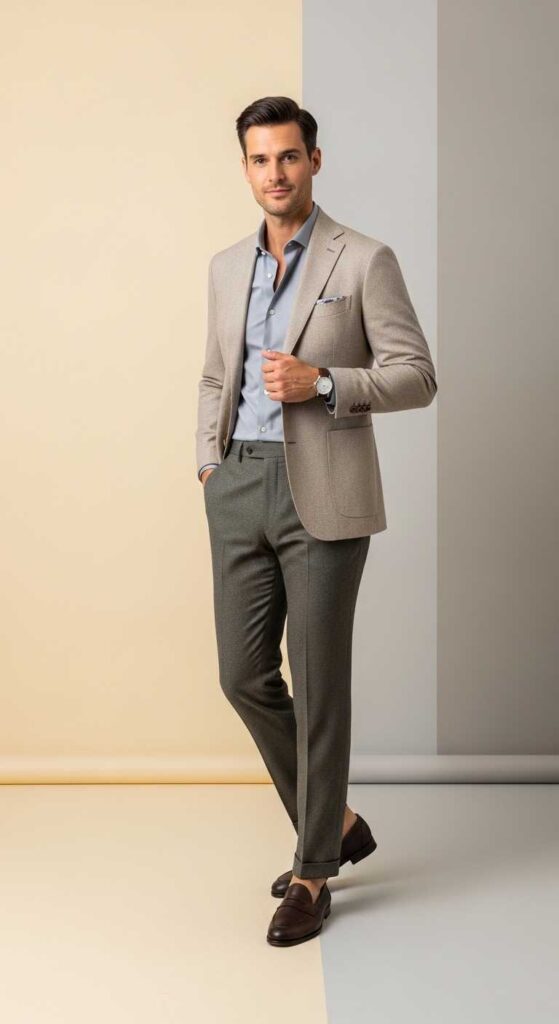
Color plays a crucial role in men business casual outfits. A neutral base palette ensures cohesion and versatility. Navy, gray, black, white, and beige serve as reliable foundations. Accent colors burgundy, forest green, or muted pastels introduce personality without disrupting professionalism.
Fabric choice affects both comfort and appearance. Breathable cotton and linen blends suit warmer weather, while wool and knit fabrics provide warmth and structure in cooler months. Texture variation, such as pairing smooth chinos with a knit sweater, adds visual depth.
Luxury labels like Ralph Lauren often showcase how texture and color layering can elevate simple business casual ensembles into refined statements.
Seasonal Approaches to Business Casual Dressing
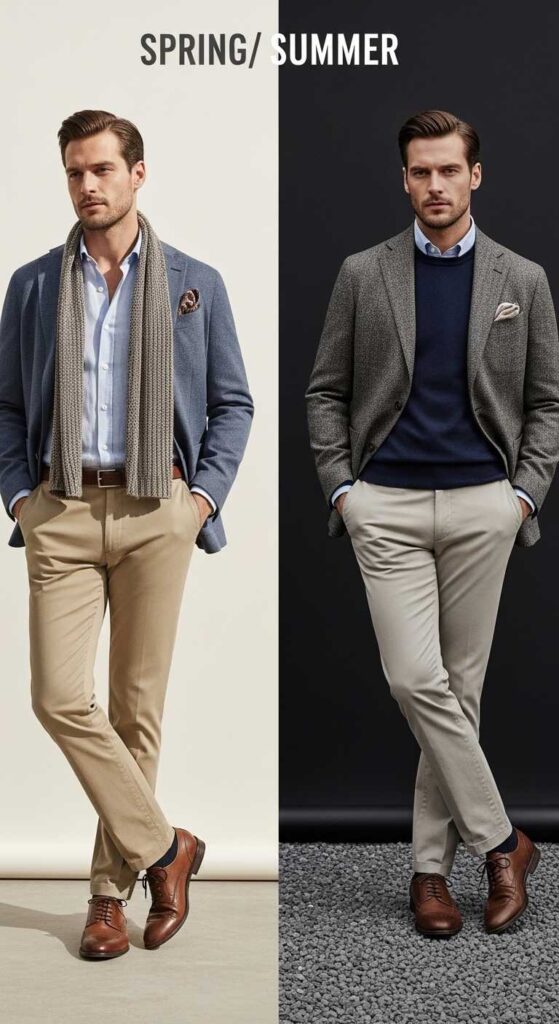
Spring and Summer Business Casual
Warmer seasons call for lighter fabrics and softer color palettes. Linen-blend shirts, lightweight chinos, and breathable loafers help maintain comfort without sacrificing style.
Short-sleeve button-down shirts can be appropriate when tailored properly. Blazers may be swapped for lightweight cardigans or left out entirely in relaxed environments.
Fall and Winter Business Casual
Colder months encourage layering and richer textures. Wool trousers, knit sweaters, and structured coats create warmth and visual interest. Earth tones such as camel, olive, and deep navy dominate fall and winter palettes.
Layering shirts under sweaters or blazers allows flexibility when transitioning between indoor and outdoor temperatures.
Building a Capsule Business Casual Wardrobe
A capsule wardrobe focuses on essential, interchangeable pieces that maximize outfit combinations. For men business casual outfits, a strong capsule might include:
- 3–5 versatile dress shirts
- 2–3 pairs of chinos or tailored trousers
- 1–2 blazers
- 2 sweaters or knit layers
- 2 pairs of professional shoes
- A neutral belt and minimal accessories
Each piece should coordinate easily with the others. Neutral colors and classic cuts ensure longevity and adaptability. Investing in quality basics reduces the need for excessive clothing while maintaining a polished daily appearance.
Outfit Ideas for Different Professional Scenarios
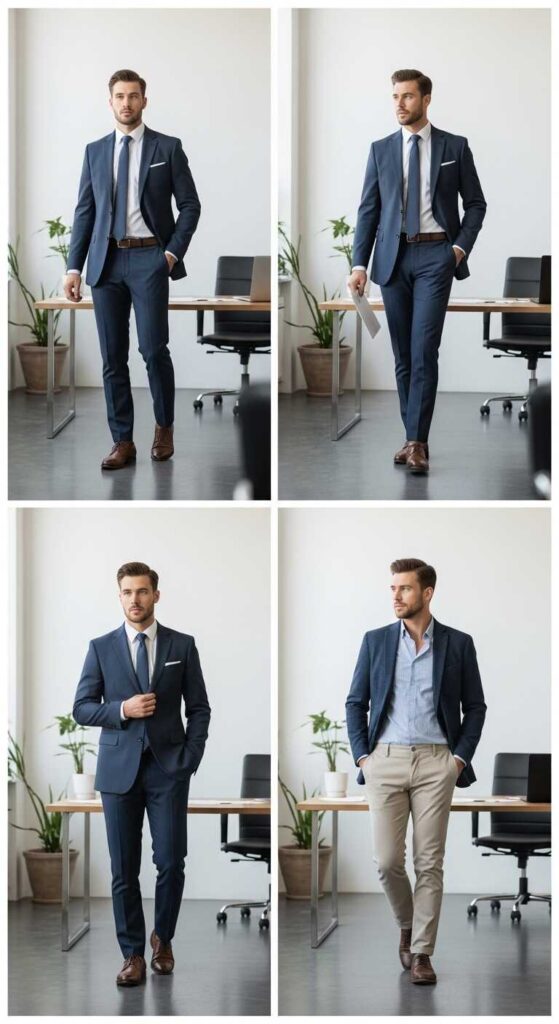
Everyday Office Wear
A light blue button-down shirt paired with navy chinos and brown loafers creates a dependable everyday look. Adding a navy blazer enhances professionalism for meetings.
Client Meetings and Presentations
For higher-stakes settings, combine a crisp white shirt with charcoal trousers and a tailored blazer. Leather derby shoes and a minimalist watch complete the refined ensemble.
Casual Fridays
Dark jeans paired with a polo shirt and clean sneakers strike a balance between relaxed and professional. A lightweight jacket maintains structure.
Networking Events
A patterned shirt under a neutral blazer adds personality while preserving polish. Slim trousers and sleek footwear keep the outfit sharp and memorable.
Fit and Tailoring The Secret to Elevated Style
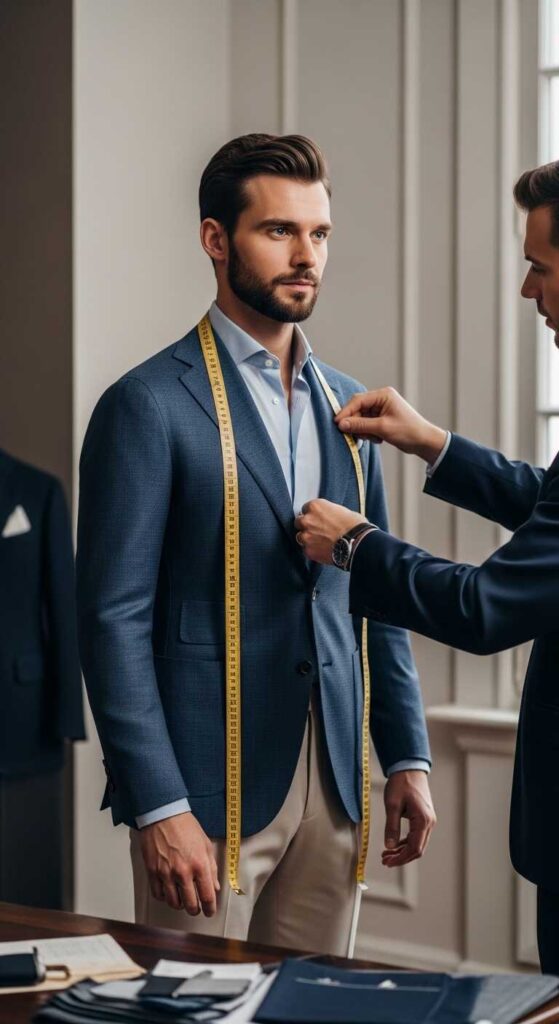
Fit is the most critical factor in men business casual outfits. Even affordable garments look sophisticated when tailored properly. Shirts should skim the body without pulling, trousers should sit comfortably at the waist, and sleeves should end at the wrist bone.
Tailoring adjustments hemming pants, slimming shirts, or adjusting jacket sleeves create a custom appearance that boosts confidence and professionalism.
Accessories and Grooming
Accessories should enhance rather than overpower business casual outfits. A classic watch, leather belt, and subtle pocket square add refinement. Avoid overly flashy jewelry or distracting elements.
Grooming is equally important. Neat hair, clean nails, and well-maintained facial hair reinforce a polished image that complements the outfit.
Common Mistakes to Avoid
Many men struggle with business casual by leaning too far toward either extreme. Common pitfalls include:
- Wearing overly casual items like graphic tees or athletic sneakers
- Choosing ill-fitting clothing
- Ignoring shoe maintenance
- Overloading outfits with accessories
- Neglecting grooming
Avoiding these mistakes ensures a consistent, professional appearance.
Adapting Business Casual to Personal Style
Business casual does not mean sacrificing individuality. Personal style can emerge through subtle color choices, unique textures, or signature accessories. The key is maintaining balance and appropriateness.
Experimentation within professional boundaries allows men to express creativity while respecting workplace expectations.
The Psychological Impact of Dressing Well
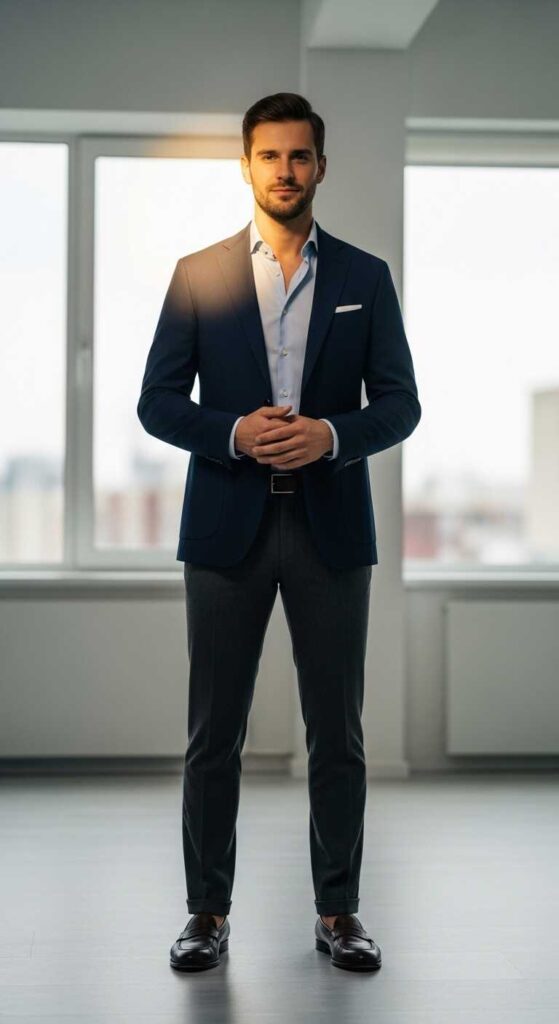
Clothing influences not only how others perceive you but also how you perceive yourself. Well-executed men business casual outfits enhance confidence, improve posture, and encourage positive interactions. Dressing intentionally can increase productivity and create a strong professional presence.
Future Trends in Men Business Casual Fashion
Modern workplaces continue to embrace flexibility, and business casual evolves accordingly. Sustainable fabrics, smart tailoring, and hybrid comfort-driven designs are shaping the future of professional wear.
Expect to see more emphasis on eco-conscious materials, minimalist aesthetics, and versatile garments that transition seamlessly between work and social settings.
Read More About: Long Male Hairstyles The Ultimate Guide to Style, Trends, and Grooming
FAQs
What are men business casual outfits?
Men business casual outfits are a style of dress that blends professional and relaxed elements. They typically include items like button-down shirts, chinos or tailored trousers, blazers, sweaters, and smart shoes. The goal is to look polished and workplace-appropriate without wearing a full formal suit.
Can jeans be worn in a business casual outfit?
Yes, in many modern workplaces dark, well-fitted jeans can be part of a business casual outfit. They should be free from rips, fading, or distressing. Pairing dark denim with a collared shirt and blazer helps maintain a professional appearance.
Do you need to wear a blazer for business casual?
A blazer is not always required, but it is a versatile piece that instantly elevates an outfit. In more relaxed offices, a sweater or cardigan may replace a blazer. For meetings or presentations, adding a blazer creates a sharper, more professional impression.
What shoes are appropriate for men business casual outfits?
Appropriate footwear includes loafers, derby shoes, brogues, and clean minimalist sneakers. Leather or suede shoes in neutral tones such as brown, black, or tan work best. Brands like Clarks are often associated with comfortable yet professional options suitable for business casual settings.
Are polo shirts acceptable in business casual attire?
Yes, polo shirts can be acceptable if they are well-fitted and made from high-quality fabric. Neutral or solid colors look more professional. Avoid oversized or heavily branded polos to maintain a clean and refined look.
How should business casual clothes fit?
Fit is crucial. Shirts should gently follow your body shape without being tight, trousers should sit comfortably at the waist, and sleeves should end at the wrist. Tailored clothing always looks more professional and polished than loose or baggy garments.
What colors work best for business casual outfits?
Neutral colors such as navy, gray, white, beige, and black form a strong foundation. You can add personality with muted accent colors like burgundy or olive. Classic menswear brands such as J.Crew often showcase balanced color palettes ideal for business casual wardrobes.
Can T-shirts be worn in a business casual environment?
Plain, high-quality T-shirts may be acceptable in very relaxed workplaces, especially when layered under a blazer or jacket. However, graphic or oversized T-shirts are generally too casual for most professional settings.
How can I make a business casual outfit look more stylish?
You can enhance style by focusing on layering, texture, and accessories. Adding a blazer, watch, or leather belt can elevate a simple outfit. Mixing fabrics such as pairing a knit sweater with tailored trousers adds visual interest.
Is business casual the same in every workplace?
No. Business casual varies depending on company culture and industry. Creative fields may allow more experimentation, while corporate environments tend to favor conservative styles. It’s always best to observe your workplace norms and dress slightly more polished when unsure.
Conclusion
Men business casual outfits represent the perfect fusion of professionalism and personal expression. By understanding core wardrobe essentials, mastering color coordination, prioritizing fit, and adapting to seasonal needs, men can build a versatile style that suits any professional environment.
A thoughtfully curated business casual wardrobe simplifies daily dressing, boosts confidence, and communicates competence. Whether attending meetings, networking events, or casual office days, mastering business casual ensures you always present your best self.


