

Japanese Fashion Men A Complete Guide to Style, Trends, and Culture
Japanese fashion for men has become a global phenomenon, admired for its unique blend of tradition, innovation, and street-smart aesthetics. From avant-garde runway looks in Tokyo’s Shibuya district to minimalist, functional outfits in Osaka, Japanese fashion men’s trends stand out for their creativity and versatility. In this guide, we explore the key principles, iconic styles, trends, wardrobe essentials, and cultural influences that shape Japanese fashion for men today.
The Evolution of Japanese Fashion for Men
Japanese fashion men’s styles have evolved over decades, influenced by cultural, social, and international factors. Post-World War II Japan witnessed a growing interest in Western fashion, which merged with local aesthetics to create distinct styles.
1960s–1980s: The emergence of Ivy League and preppy styles in Japan, inspired by American fashion, marked the beginning of a more globalized approach. Brands like Beams and United Arrows started to redefine men’s style in Japan.
1990s–2000s: Streetwear and subcultures gained momentum. Labels such as Comme des Garçons, A Bathing Ape (BAPE), and Undercover became iconic for pushing the boundaries of design, often mixing Western street culture with Japanese innovation.
2010s–Present: A mix of minimalism, techwear, and luxury streetwear dominates. Japanese fashion men’s outfits now range from high-end designer collaborations to practical, functional everyday wear.
Key Principles of Japanese Fashion for Men
Understanding Japanese fashion requires familiarity with the principles that guide style choices among men. These principles are consistent across different Japanese fashion subcultures.
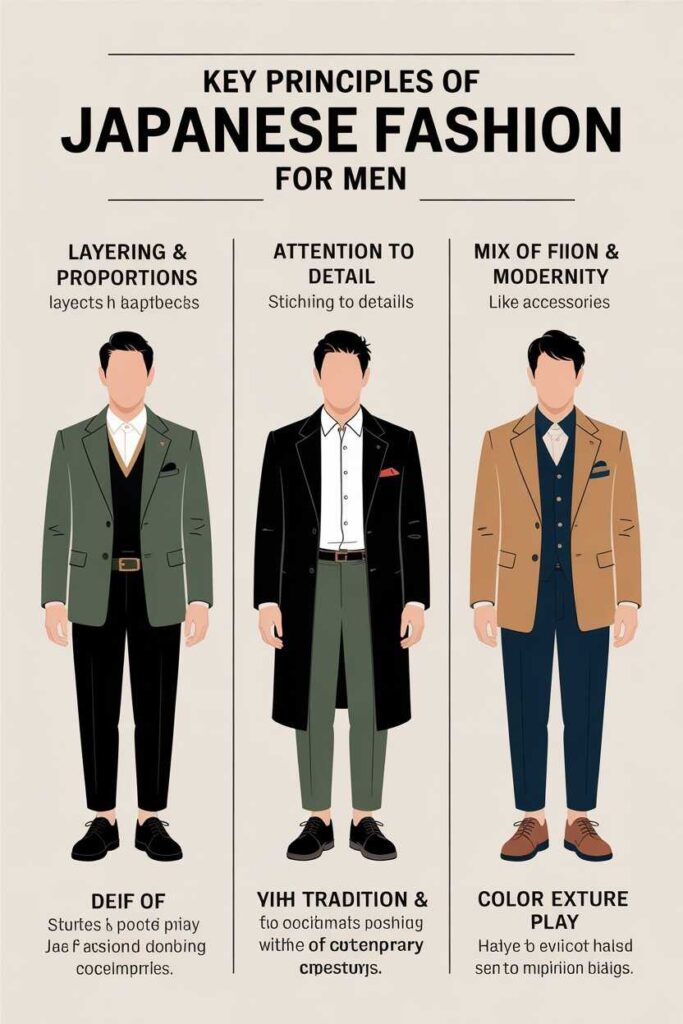
Layering and Proportions
Japanese men’s fashion often emphasizes layering, balancing loose silhouettes with structured pieces. For instance, an oversized coat over a tailored shirt or a longline T-shirt under a cropped jacket is common. Proportions are carefully considered to create a harmonious yet eye-catching outfit.
Attention to Detail
Small elements like a folded cuff, a hidden zipper, or subtle embroidery play a significant role. Japanese fashion men’s styles often feature understated details that elevate an outfit without being overtly flashy.
Mix of Tradition and Modernity
From kimono-inspired jackets to contemporary streetwear, Japanese fashion men often fuse traditional motifs with modern cuts. This approach creates clothing that is culturally resonant and fashion-forward simultaneously.
Color and Texture Play
Japanese men’s fashion frequently incorporates neutral tones like black, beige, and gray, complemented with occasional vibrant pops of color. Mixing textures such as wool with nylon or cotton with leather is also a common technique.
Iconic Japanese Fashion Styles for Men
Japanese fashion is diverse, and men’s styles vary from minimalistic elegance to bold streetwear. Here are some key styles:
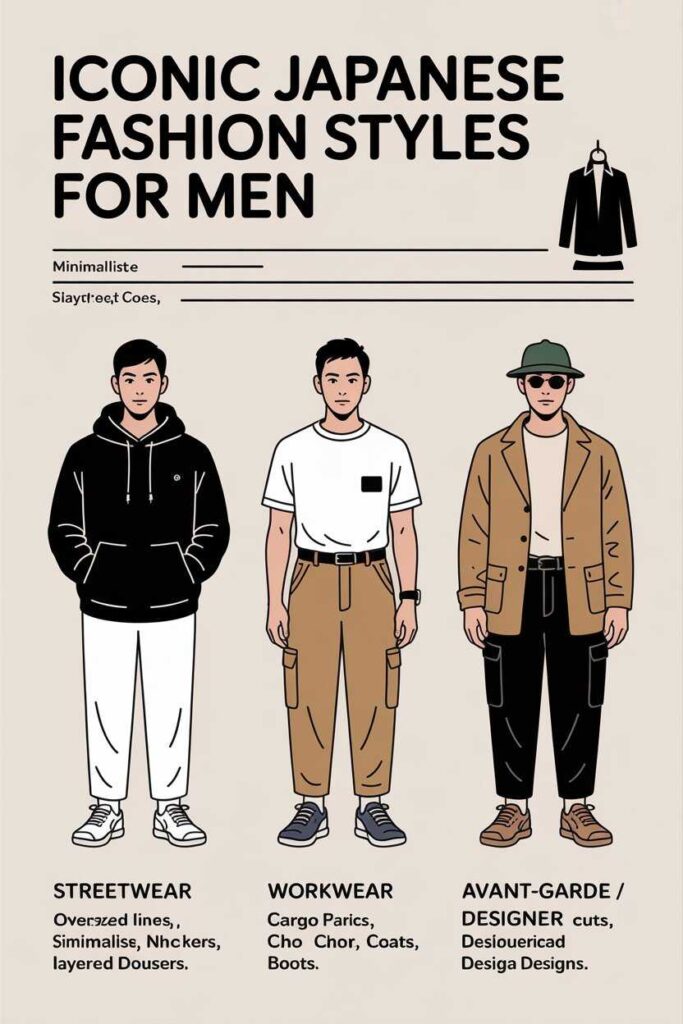
Streetwear
Streetwear dominates urban Japanese fashion for men, especially in districts like Shibuya and Harajuku. Key elements include:
- Oversized hoodies and T-shirts
- Sneakers and high-top shoes
- Graphic prints and logos
- Layered jackets and cargo pants
Brands like BAPE, Neighborhood, and WTAPS are essential for men seeking authentic Japanese streetwear.
Minimalist and Workwear Styles
Minimalism emphasizes simplicity, neutral tones, and clean lines. Workwear fashion is inspired by functional clothing used in factories and fields, featuring durable fabrics and practical designs. Key items include:
- Chinos and straight-leg pants
- Denim jackets and chore coats
- Leather boots or simple sneakers
Brands like Muji and Uniqlo exemplify minimalist Japanese fashion for men.
Avant-Garde and Designer Fashion
Avant-garde Japanese fashion men’s trends are often experimental, challenging traditional notions of form and structure. Key designers include:
- Comme des Garçons: Known for asymmetrical cuts and deconstructed designs.
- Yohji Yamamoto: Renowned for oversized silhouettes and monochromatic palettes.
- Issey Miyake: Famous for pleated fabrics and futuristic textures.
This style is perfect for men who want to make bold statements while maintaining sophistication.
Read More About: Wolf Cut Hair Men The Complete Guide (Trends, Styling, Face Shapes & Maintenance)
Casual and Everyday Japanese Style
Everyday fashion for Japanese men blends comfort, practicality, and subtle style. Typical features:
- Neutral-toned T-shirts and button-ups
- Slim-fit or tapered trousers
- Sneakers or loafers
- Light jackets or hoodies layered for function and style
This approach focuses on effortless elegance while staying modern and approachable.
Wardrobe Essentials for Japanese Fashion Men
Building a Japanese-inspired wardrobe involves selecting pieces that can be mixed and matched to achieve versatile looks.
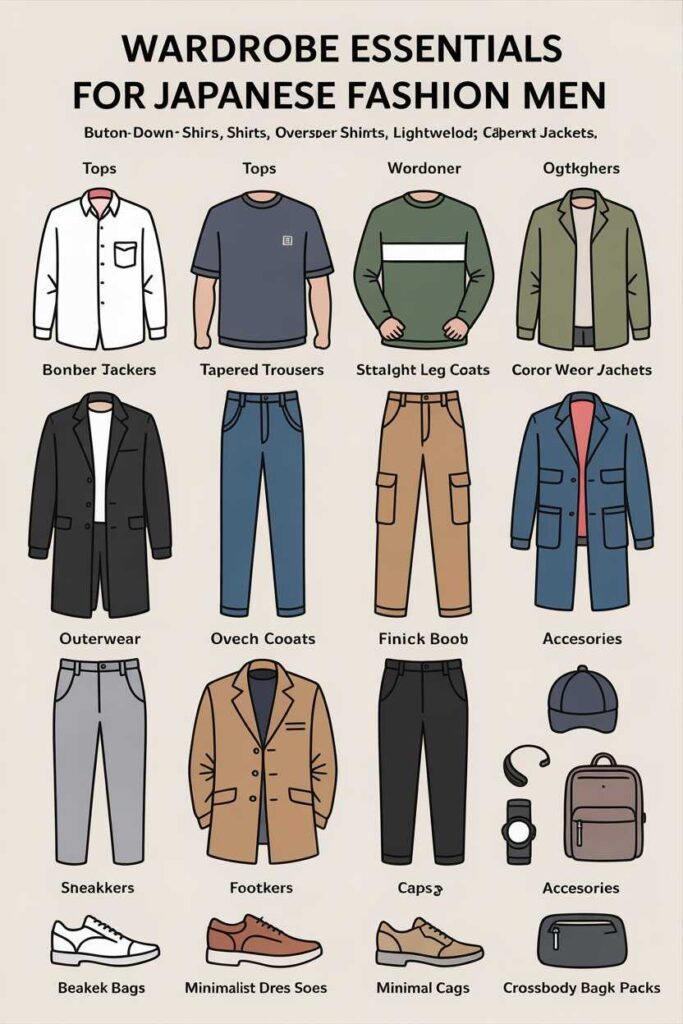
Tops
Button-Down Shirts: Crisp, neutral, or subtly patterned shirts are versatile for layering.
Oversized Tees and Sweatshirts: Essential for streetwear and casual looks.
Layering Pieces: Lightweight jackets, cardigans, or longline shirts create depth.
Bottoms
Tapered or Wide-Leg Trousers: Balance proportions depending on your top layer.
Straight-Leg Jeans: Dark denim works for casual or semi-formal occasions.
Cargo Pants or Workwear Pants: For a streetwear or functional style.
Outerwear
Bomber Jackets and Parkas: Perfect for layering in urban streetwear.
Trench Coats and Overcoats: Offer minimalistic elegance and refinement.
Denim or Chore Jackets: Casual yet stylish, ideal for everyday wear.
Footwear
Sneakers: White leather sneakers are a staple; bold designs suit streetwear.
Leather Boots: For a rugged, workwear-inspired look.
Loafers or Minimalist Dress Shoes: Elevate casual outfits to smart-casual levels.
Accessories
Caps and Beanies: Streetwear essentials.
Minimalist Watches: Subtle details highlight sophistication.
Bags: Crossbody bags or backpacks balance functionality and style.
Japanese Fashion Men by Subculture
Japanese fashion men’s style is often categorized by subculture, each with its distinct aesthetics and influence.
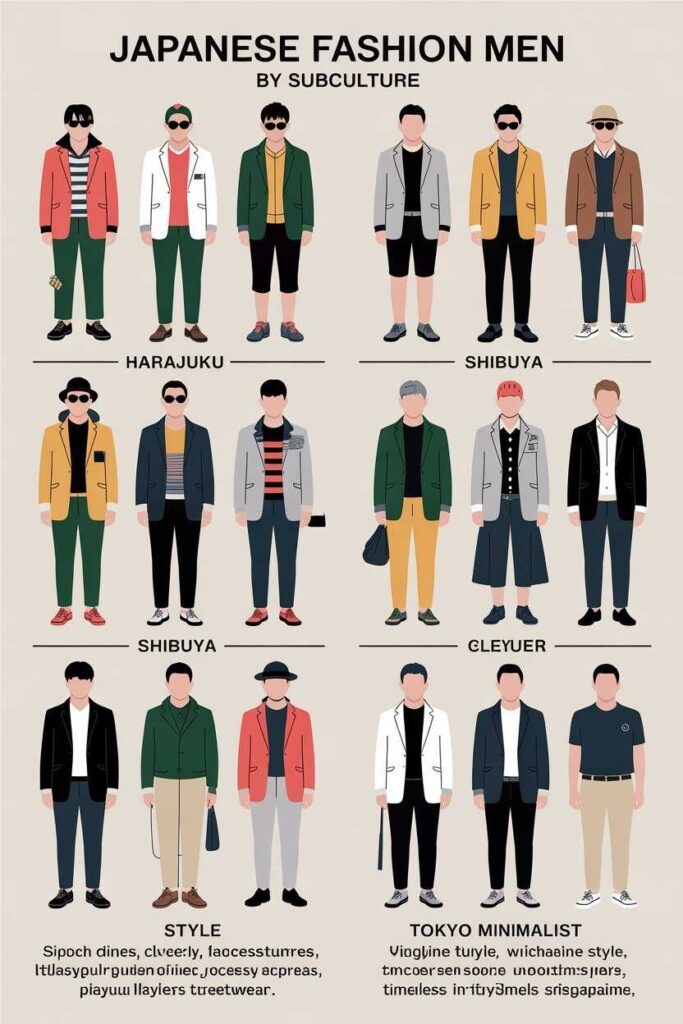
Harajuku Style
Harajuku fashion is eclectic, playful, and sometimes extreme. Features include:
- Bold colors and patterns
- Layered outfits with varying textures
- Quirky accessories and statement shoes
This style is ideal for fashion-forward men who want to experiment and stand out.
Shibuya Style
Shibuya fashion is urban and trendy, often blending streetwear with high-end pieces:
- Oversized hoodies paired with tailored trousers
- Designer sneakers or boots
- Neutral tones punctuated with occasional bright accents
Shibuya style is widely popular among young Japanese men and is influential worldwide.
Tokyo Minimalist Style
Minimalist Japanese men’s fashion focuses on simplicity, quality, and timelessness:
- Monochromatic color schemes
- Clean cuts and simple silhouettes
- Quality over quantity in material selection
This style reflects practicality while remaining stylish and refined.
Seasonal Considerations in Japanese Men’s Fashion
Japanese fashion men’s wardrobes adapt to the four distinct seasons in Japan, each inspiring specific choices:
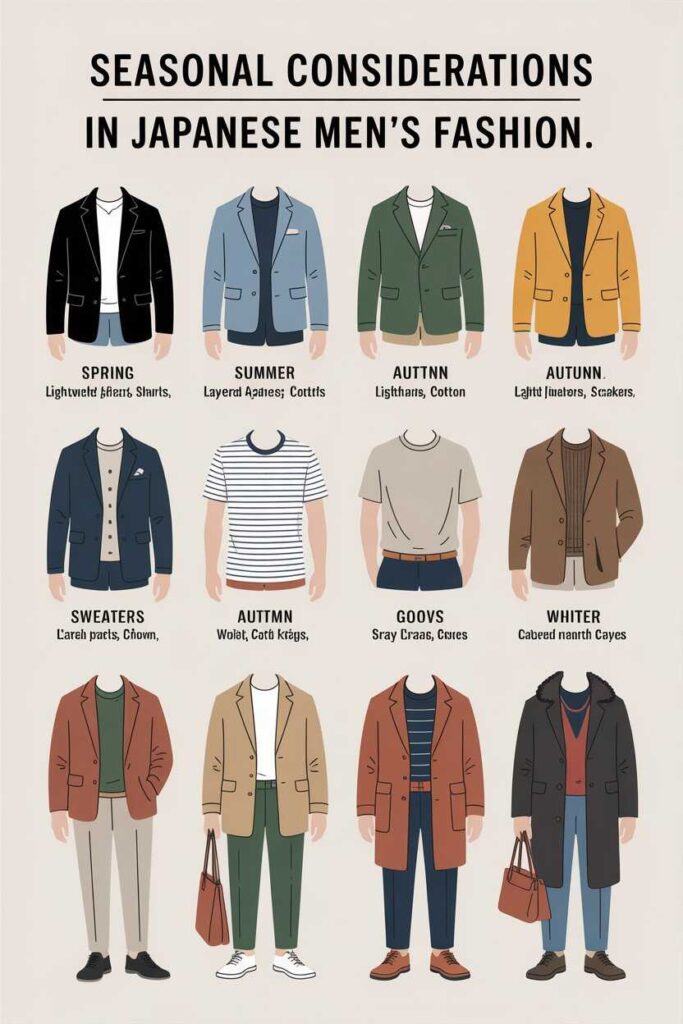
Spring
- Lightweight jackets like trench coats or denim jackets
- Layered shirts and T-shirts
- Neutral or pastel colors
Summer
- Breathable fabrics: linen shirts, cotton tees, and shorts
- Loafers, sneakers, or sandals
- Light layering to accommodate sudden rain or cooler evenings
Autumn
- Sweaters, cardigans, and layered outerwear
- Earth tones: brown, olive, beige
- Boots or sturdy sneakers
Winter
- Heavy coats: wool overcoats, padded jackets, or parkas
- Scarves, gloves, and hats for functionality
- Layering with sweaters and long-sleeve shirts for warmth
How to Style Japanese Fashion Men’s Outfits
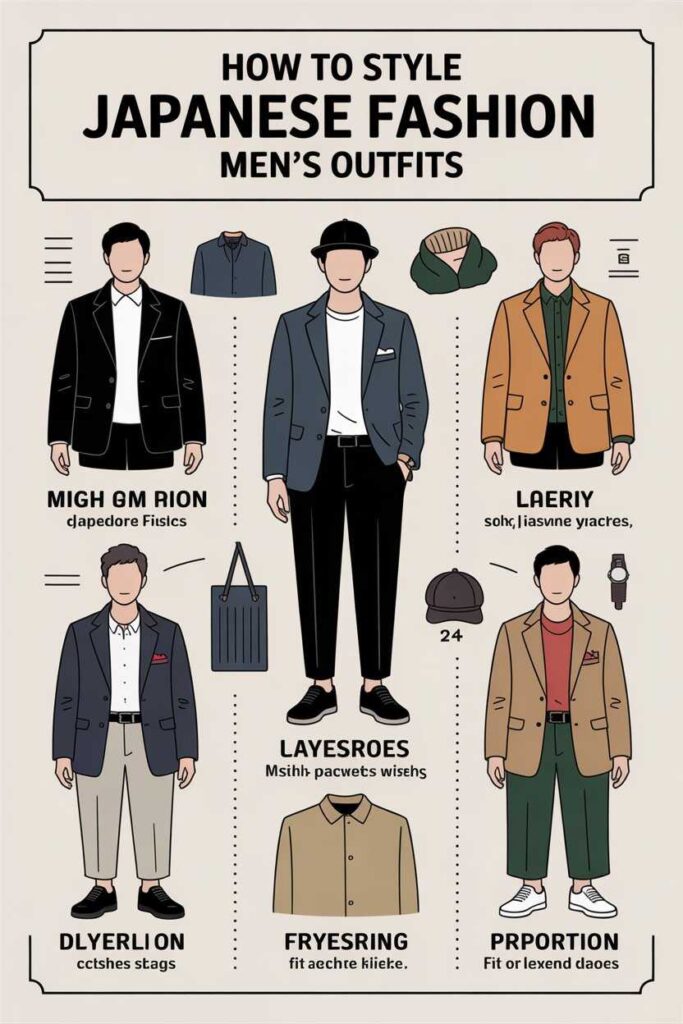
Mix High and Low Fashion
Combine designer pieces with streetwear or functional basics. For instance, pair a Yohji Yamamoto coat with Uniqlo trousers and sneakers for a balanced, fashionable look.
Focus on Layers and Textures
Layering isn’t just practical; it adds visual interest. Mix different textures wool, cotton, denim, nylon to create depth and character in your outfit.
Use Accessories Wisely
Japanese fashion men’s style often emphasizes subtle accessories: minimal watches, caps, or understated jewelry. Avoid overcrowding an outfit; one statement piece can elevate the entire look.
Prioritize Fit and Proportion
Even oversized streetwear pieces need to be proportionate to your body type. Avoid extremes unless intentionally going for an avant-garde look.
Cultural Influences on Japanese Men’s Fashion
Japanese fashion is deeply rooted in cultural aesthetics, including concepts like wabi-sabi (beauty in imperfection) and ma (space and balance). These philosophies influence how clothing is designed, worn, and appreciated.
Respect for Craftsmanship: Japanese fashion often emphasizes meticulous construction and quality fabrics.
Harmony with Environment: Seasonal adaptability is key, reflecting sensitivity to nature and surroundings.
Individuality vs. Conformity: While fashion allows personal expression, subtlety and tastefulness remain important in Japanese men’s style.
Where to Shop for Japanese Fashion Men’s Clothing
Finding authentic Japanese fashion pieces can be both exciting and challenging. Consider these sources:
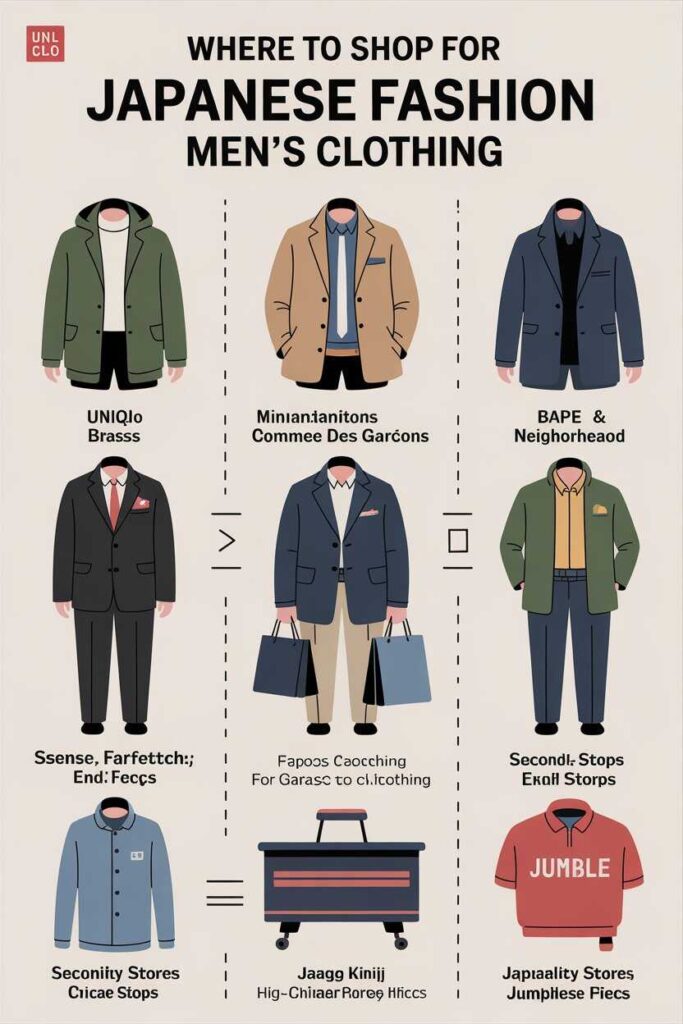
Japanese Brands
- Uniqlo: Affordable basics with minimalist designs
- Comme des Garçons: High-end designer for avant-garde fashion
- BAPE and Neighborhood: Iconic streetwear brands
International Retailers
Many Japanese brands are now globally available, including online stores like SSENSE, Farfetch, and END Clothing.
Second-Hand Stores
Japan is famous for its high-quality second-hand fashion. Shops like Chicago, Kinji, and Jumble Store sell vintage designer and streetwear items.
Common Mistakes in Japanese Men’s Fashion
To fully embrace Japanese fashion for men, avoid these pitfalls:
Overloading Accessories: Less is more in Japanese style.
Ignoring Fit: Oversized doesn’t mean sloppy. Ensure pieces are well-proportioned.
Neglecting Layering Techniques: Proper layering is essential for style and function.
Overlooking Seasonal Appropriateness: Matching fabric and layers to the season is key.
Japanese Fashion Men Trends in 2025
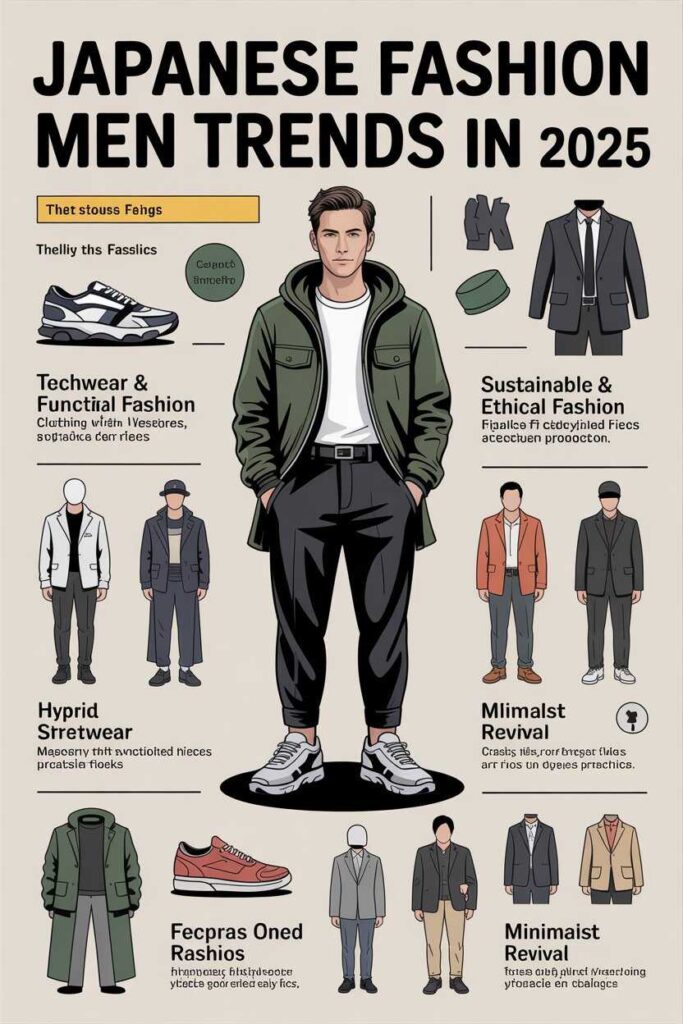
Techwear and Functional Fashion: Clothing that merges fashion with utility and innovation.
Sustainable and Ethical Fashion: Emphasis on eco-friendly materials and production methods.
Hybrid Streetwear: Mixing classic tailoring with streetwear elements for a unique look.
Minimalist Revival: Clean lines, neutral palettes, and timeless pieces remain popular.
Read More About: Old Money Outfits Men The Ultimate Guide to Timeless Elegance
FAQs
What is Japanese fashion for men?
Japanese fashion for men is a style that combines minimalism, streetwear, and avant-garde designs. It emphasizes layering, proportion, attention to detail, and a mix of traditional and modern elements.
What are the key styles in Japanese men’s fashion?
Key styles include:
- Streetwear: Bold, casual, and layered outfits
- Minimalist: Simple, clean, and neutral-toned clothing
- Workwear: Functional, durable, and practical pieces
- Avant-garde: Experimental, deconstructed, and designer-focused looks
Which Japanese brands are best for men?
Some top brands include:
- Streetwear: BAPE, Neighborhood, WTAPS
- Designer: Comme des Garçons, Yohji Yamamoto, Issey Miyake
- Minimalist/Everyday: Uniqlo, Muji
Can Japanese fashion be adapted for Western wardrobes?
Yes. Japanese fashion focuses on layering, proportion, and detail, which can be combined with Western clothing basics to create versatile and stylish outfits.
How do I start dressing in Japanese fashion as a man?
Start with:
- Neutral-colored basics (T-shirts, trousers)
- Simple outerwear (jackets, coats)
- Minimal accessories
Gradually experiment with layering, textures, and streetwear elements.
Is Japanese fashion only for young men?
No. Japanese fashion is versatile and can be adapted for all ages. Minimalist and functional styles appeal to older men, while streetwear and avant-garde suit younger audiences.
How important is layering in Japanese men’s fashion?
Layering is essential. It adds depth, contrast, and sophistication. Even casual outfits benefit from smart layering with different textures and lengths.
What footwear works best in Japanese fashion?
Footwear depends on the style:
- Streetwear: Sneakers or high-tops
- Minimalist: Simple leather shoes or white sneakers
- Workwear: Boots or durable shoes
- Avant-garde: Statement shoes or designer footwear
How do I maintain a Japanese-inspired wardrobe?
Focus on:
- High-quality fabrics
- Proper fit and tailoring
- Versatile, mix-and-match pieces
- Seasonal rotation of clothing
What trends are popular in Japanese fashion for men in 2025?
- Techwear and functional clothing
- Sustainable and eco-friendly fashion
- Hybrid streetwear with tailored elements
- Minimalist, timeless, and neutral-toned wardrobes
Conclusion
Japanese fashion for men is a fascinating blend of tradition, innovation, and cultural expression. Whether you’re drawn to minimalist elegance, functional workwear, bold streetwear, or avant-garde designer pieces, Japanese fashion men’s style offers something for everyone. By understanding the principles of layering, proportion, and detail, you can create versatile, modern, and culturally inspired outfits that stand out globally.
Embracing Japanese fashion isn’t just about wearing clothes; it’s about appreciating craftsmanship, creativity, and thoughtful self-expression. Start with wardrobe essentials, experiment with layering, and incorporate subtle details to master Japanese men’s fashion and make it uniquely yours.


