

Groomsmen Attire The Ultimate Guide to Style, Coordination, and Elegance
When it comes to weddings, every detail matters. From the venue to the floral arrangements, every element contributes to the perfect day. However, one aspect that often gets overlooked but is just as important is groomsmen attire. The way your groomsmen look not only complements the groom but also sets the tone for the wedding’s overall aesthetic. Choosing the right outfits requires careful consideration of style, fit, coordination, and personality. This guide will walk you through everything you need to know about groomsmen attire, ensuring your wedding party looks cohesive, stylish, and confident.
Understanding the Importance of Groomsmen Attire
The role of groomsmen is not only ceremonial but also visual. Your groomsmen’s attire contributes to:
Wedding Aesthetic: The style of clothing your groomsmen wear should align with the theme, season, and formality of your wedding.
Photography: Coordinated attire ensures that wedding photos look polished and timeless.
Cohesion and Identity: Matching or complementary outfits create a sense of unity among the wedding party, highlighting the groom while giving groomsmen their own stylish presence.
Choosing the wrong attire can disrupt the visual harmony of your wedding, so thoughtful planning is essential.
Key Factors to Consider When Choosing Groomsmen Attire
Wedding Theme and Formality
The first step in selecting groomsmen attire is understanding your wedding’s theme. Formality dictates the type of clothing your groomsmen should wear:
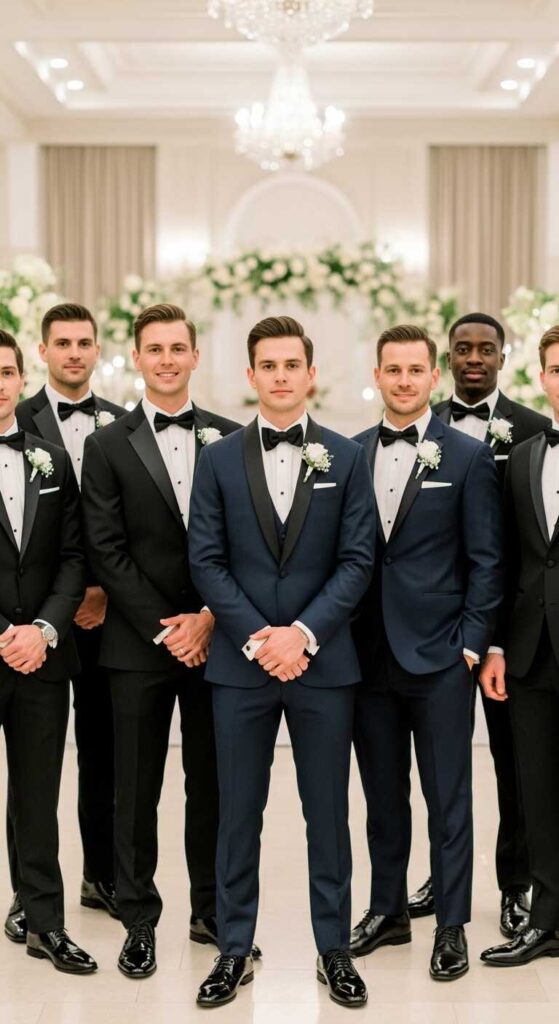
Black-Tie Weddings: Tuxedos, bow ties, and patent leather shoes are standard. Stick to classic colors like black, navy, or charcoal.
Formal Weddings: Dark suits or tuxedos work well, paired with elegant ties or cravats.
Semi-Formal/Smart Casual Weddings: Lighter suits, blazers, or even dress pants with vests can create a stylish yet relaxed look.
Casual Weddings: Chinos, suspenders, and casual shirts may be appropriate, especially for outdoor or beach weddings.
Read More About: Men Loc Styles The Ultimate Guide to Locs, Expression, and Care
Color Palette
Colors are essential for visual cohesion. Consider:
- Complementing the bride’s palette and wedding décor.
- Seasonality: lighter shades in spring/summer, darker shades in fall/winter.
- Groom differentiation: sometimes the groom wears a slightly different color or style to stand out.
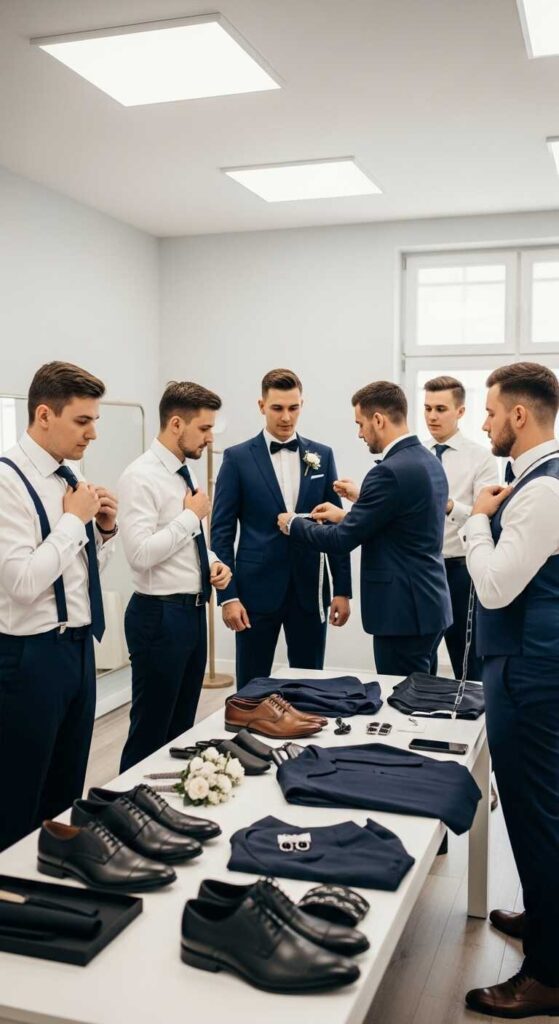
Fit and Comfort
Your groomsmen should feel confident and comfortable. Ill-fitting clothing can ruin photos and overall presentation. Options include:
Tailored suits: Always ideal; adjust for height, build, and body shape.
Rental vs. Purchase: Rentals are cost-effective for one-time use, while purchases allow for more customization and keepsakes.
Accessories
Accessories complete the look:
- Ties, bow ties, and pocket squares.
- Shoes: polished and coordinated with the outfit.
- Cufflinks, watches, and boutonnières for added elegance.
Classic Groomsmen Attire Options
Traditional Tuxedo
The tuxedo is a timeless choice for formal weddings. Features include:
- Satin lapels, formal dress shirts, cummerbunds, or vests.
- Accessories: black patent leather shoes, bow ties, and cufflinks.
- Colors: Black is classic, navy adds a modern touch, and grey works for less formal events.
Suit Options
Suits are versatile and can be tailored to different wedding themes:
- Two-piece suit: Jacket and trousers in the same color. Ideal for modern weddings.
- Three-piece suit: Includes a vest for added sophistication.
- Popular colors: navy, charcoal, grey, beige, and even pastel shades for spring/summer weddings.
Modern and Trendy Styles
For couples wanting a contemporary flair:
- Slim-fit suits or tuxedos.
- Colored suits like burgundy, emerald, or powder blue.
- Patterned blazers (checks, stripes) paired with neutral trousers.
Casual or Beach Attire
For outdoor or destination weddings:
- Linen suits or light blazers.
- Dress shirts with rolled-up sleeves.
- Suspenders or bow ties for a quirky, stylish touch.
Coordinating Groomsmen with the Groom
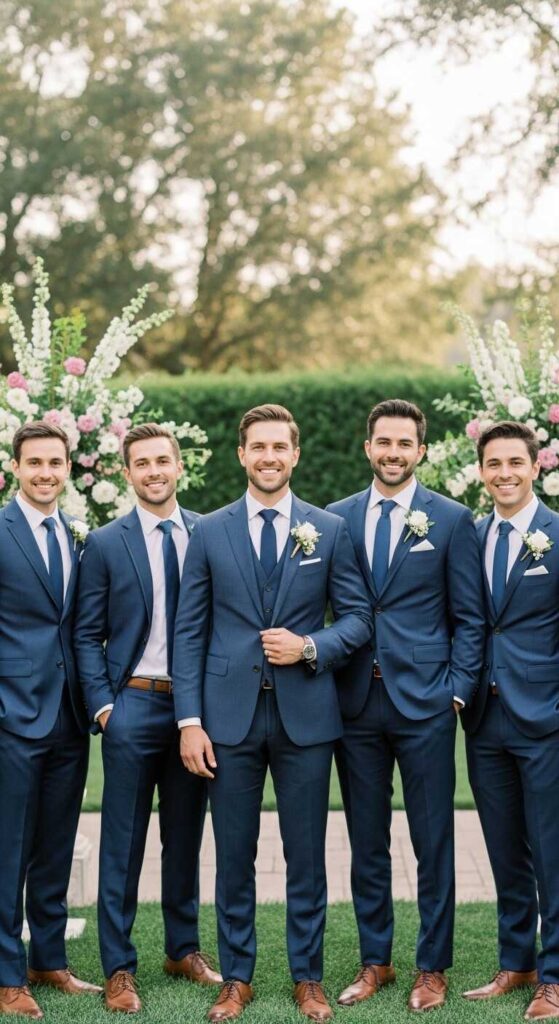
While it’s essential for groomsmen to look good individually, coordination with the groom is crucial:
Matching vs. Complementary: Groomsmen can match the groom or wear complementary shades for visual hierarchy.
Subtle differences: The groom might wear a unique tie, lapel pin, or boutonnière to stand out.
Accessories synchronization: Pocket squares, shoes, and ties can tie the wedding party together visually.
Seasonal Considerations
Seasonality affects fabric choice, color palette, and comfort:
Spring/Summer: Lighter fabrics like linen, cotton, and lightweight wool. Softer colors like pastels, beige, and light grey.
Fall/Winter: Heavier fabrics like wool or tweed. Rich colors like navy, burgundy, deep green, and charcoal.
Groomsmen Attire for Different Body Types
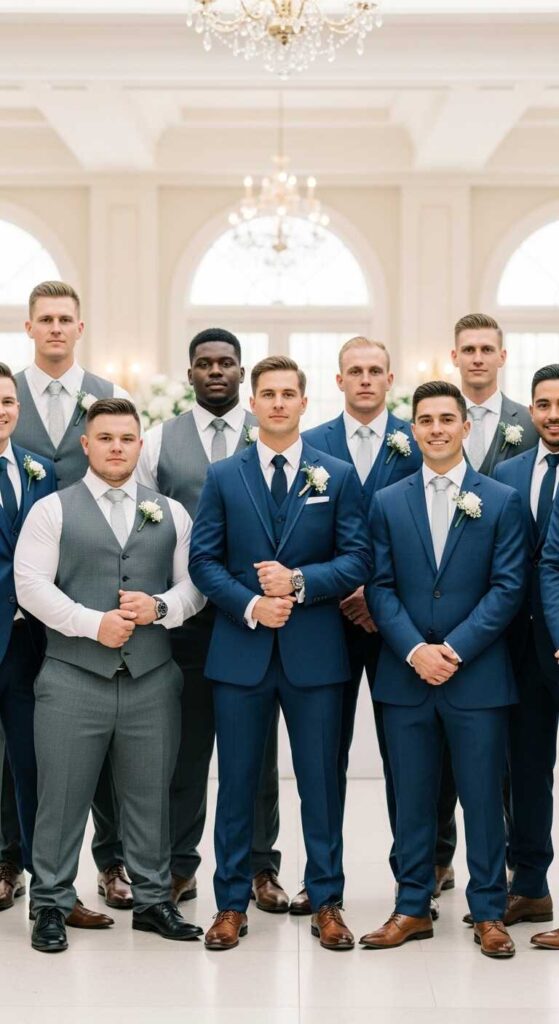
Ensuring the right fit for all groomsmen is essential:
Tall and lean: Slim-fit suits or jackets with structured shoulders.
Shorter build: Avoid overly long jackets; slim trousers elongate the legs.
Broad build: Single-breasted suits with a slight taper; darker shades are slimming.
Curvy or stocky: Opt for tailored fits, not tight-fitting options, to provide comfort without sacrificing style.
Accessories That Elevate the Look
Accessories can make a good outfit great:
Ties and Bow Ties: Match or complement wedding colors.
Shoes: Classic leather oxfords, brogues, or loafers.
Cufflinks and Watches: Personal touches that add sophistication.
Boutonnières: Flowers or lapel pins to match the bridal bouquet or wedding theme.
Socks and Suspenders: Can be playful or thematic to show personality.
Budget Considerations
Budget is a practical aspect:
Rentals: Cost-effective; good for one-time wear, often including tuxedos, shoes, and accessories.
Purchases: Allow for long-term use; higher upfront cost but offers personalization.
DIY Coordination: Mix-and-match suits and accessories to reduce costs while keeping a cohesive look.
Tips for Choosing the Perfect Groomsmen Attire
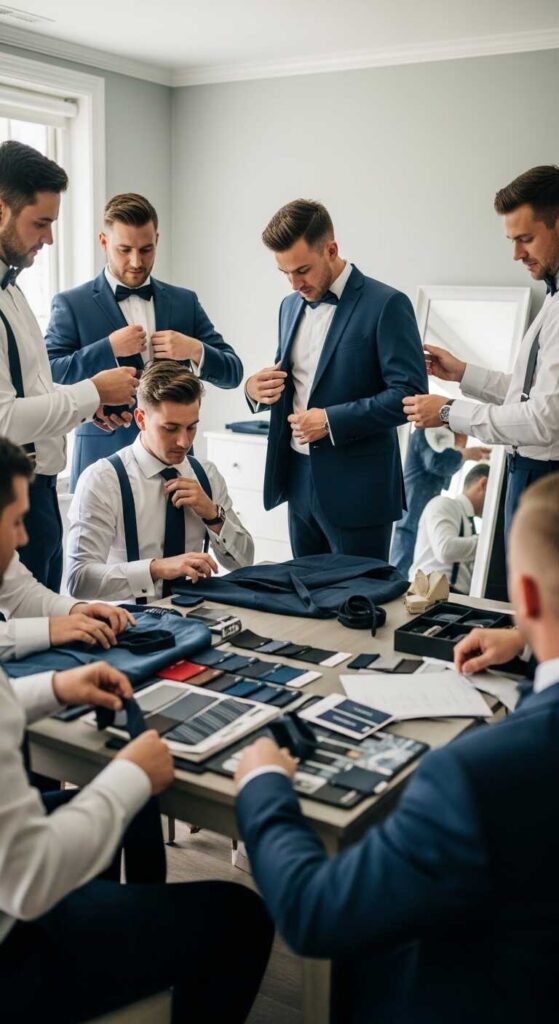
Plan Early: Begin discussions months in advance to allow for tailoring and rentals.
Include the Groomsmen: Get their input on comfort, size, and style.
Consider All Wedding Elements: Venue, theme, and season should guide choices.
Uniformity vs. Individuality: Allow small personal touches without compromising overall cohesion.
Test Run: Have a fitting day where everyone tries on their outfits for adjustments and coordination.
Common Mistakes to Avoid
Ignoring Comfort: Ill-fitting suits ruin photos and confidence.
Overcomplicating Color Schemes: Too many contrasting colors can look chaotic.
Neglecting the Groom’s Standout Factor: The groom should be distinguishable without overshadowing the groomsmen.
Last-Minute Planning: Rushed choices often lead to poor fit, missing accessories, or clashing styles.
Ignoring Body Diversity: Ensure all groomsmen, regardless of size, are tailored to perfection.
Read More About: Bride and Groom The Ultimate Guide to Love, Style, Tradition, and Modern Wedding Elegance
FAQs
Should groomsmen all wear the same suit or tuxedo?
Not necessarily. Groomsmen can wear matching outfits for a classic look or complementary styles and colors for a modern, stylish vibe. The key is to coordinate with the groom’s outfit so he stands out subtly.
How far in advance should groomsmen attire be decided?
Ideally, 4–6 months before the wedding. This allows time for measurements, tailoring, ordering accessories, and addressing any unforeseen issues like size adjustments or shipping delays.
Is it better to rent or buy groomsmen suits?
It depends on budget and long-term use. Rentals are cost-effective and convenient for one-time weddings. Buying allows for customization, better fit, and the option for groomsmen to reuse the outfit in the future.
Can groomsmen wear casual attire for a formal wedding?
Generally, no. Attire should match the wedding’s formality. Casual looks work for informal, beach, or outdoor weddings, but formal events require suits or tuxedos for cohesion and elegance.
How should groomsmen coordinate with the wedding theme or colors?
Start by aligning with the wedding’s overall color palette. Subtle variations in ties, pocket squares, or vests can create dimension while still complementing the bride and groom’s colors.
What accessories are essential for groomsmen?
Key accessories include ties or bow ties, pocket squares, shoes, and boutonnières. Watches, cufflinks, suspenders, and even socks can enhance personal style while keeping the group cohesive.
How can I ensure the suits fit all groomsmen properly?
Encourage early measurements and choose tailored or adjustable options. Consider different body types, and schedule a fitting day for adjustments to ensure everyone feels confident and comfortable.
Can groomsmen wear different styles but same color?
Yes! This allows personalization while maintaining visual unity. For example, one groomsman could wear a vest, another a two-piece suit, but all in the same color family.
What footwear works best for groomsmen?
Classic leather shoes like oxfords, brogues, or loafers are preferred. Match the shoe color to the outfit black for black tuxedos, brown or tan for navy or grey suits, and casual shoes for informal weddings.
How can groomsmen reflect their personality while staying coordinated?
Small details like patterned socks, unique cufflinks, or subtle tie variations allow personal expression without disrupting group cohesion. These touches can make photos and memories more memorable.
Conclusion
Choosing the right groomsmen attire is more than just picking a suit. It’s about creating harmony, reflecting the wedding’s theme, and ensuring everyone feels confident and stylish. From classic tuxedos to modern slim-fit suits, and from seasonal fabrics to thoughtful accessories.
There are countless ways to make your wedding party look elegant and cohesive. By carefully considering fit, color, style, and coordination, you ensure that your groomsmen complement the groom perfectly, leaving lasting memories and timeless photos.


