

Clothing Styles The Ultimate Guide to Fashion, Expression, and Personal Style
Clothing is more than just a way to cover our bodies it is a powerful form of self-expression, a reflection of culture, and an art form that evolves with time. Understanding clothing styles allows individuals to communicate their personality, mood, and values through their wardrobe choices. Whether it’s for professional settings, casual outings, or special occasions, knowing your clothing styles helps you make confident, stylish decisions. In this comprehensive guide, we explore clothing styles for men, women, and unisex fashion, covering everything from classic looks to modern trends, seasonal adaptations, and tips for building a versatile wardrobe.
Understanding Clothing Styles
Clothing styles refer to distinctive ways in which garments are designed, worn, and combined to create a visual identity. These styles are influenced by:
Culture and heritage: Traditional attire often shapes contemporary fashion.
Lifestyle: Daily activities and work environments influence what clothing styles are practical.
Personality: Personal preferences determine choices like colors, patterns, and silhouettes.
Trends: Fashion trends evolve seasonally, reflecting societal changes and innovations.
Clothing styles can generally be categorized into formal, casual, athleisure, vintage, streetwear, and experimental/fashion-forward styles. Each category has unique characteristics, which we’ll explore below.
Men’s Clothing Styles
Men’s fashion has come a long way, moving beyond the traditional suit-and-tie approach. Modern men have a wide array of clothing styles to choose from, balancing comfort, functionality, and personal expression.
Classic Formal Style
Classic formal style is synonymous with elegance and professionalism. It includes suits, blazers, tailored trousers, dress shirts, and formal shoes.
Key Elements:
- Well-fitted suits in neutral colors (navy, black, gray)
- Crisp dress shirts in white or pastel shades
- Ties or bowties for added sophistication
- Leather dress shoes and belts
Tips:
- Fit is everything: tailor your suit to match your body shape.
- Match accessories like watches and cufflinks for a polished look.
Casual Everyday Style
Casual wear is about comfort and practicality while maintaining style. This includes jeans, chinos, t-shirts, polos, sweaters, and casual shoes like sneakers or loafers.
Key Elements:
- Slim-fit or straight-leg jeans
- Layering with jackets, hoodies, or cardigans
- Neutral and versatile color palette
- Minimalist footwear
Tips:
- Mix textures (denim with cotton or wool) for a stylish layered look.
- Casual doesn’t mean sloppy keep clothes clean and well-fitted.
Streetwear and Urban Fashion
Streetwear blends urban culture, music, and modern trends. It often includes sneakers, graphic tees, hoodies, oversized jackets, and accessories like caps and chains.
Key Elements:
- Bold prints and graphics
- Statement sneakers
- Mix of high-end and casual brands
- Layering oversized pieces
Tips:
- Balance bold pieces with neutral basics to avoid clashing.
- Incorporate elements like beanies, backpacks, or watches for personality.
Vintage and Retro Styles
Vintage style incorporates fashion from past decades, often emphasizing 70s, 80s, and 90s aesthetics. Think retro prints, flared trousers, leather jackets, and old-school sneakers.
Tips:
- Mix vintage pieces with modern basics to keep the look fresh.
- Pay attention to colors and patterns typical of the era you’re inspired by.
Women’s Clothing Styles
Women’s fashion is diverse, offering endless opportunities for creativity, self-expression, and elegance. From everyday casual wear to statement-making outfits, clothing styles allow women to present themselves confidently.
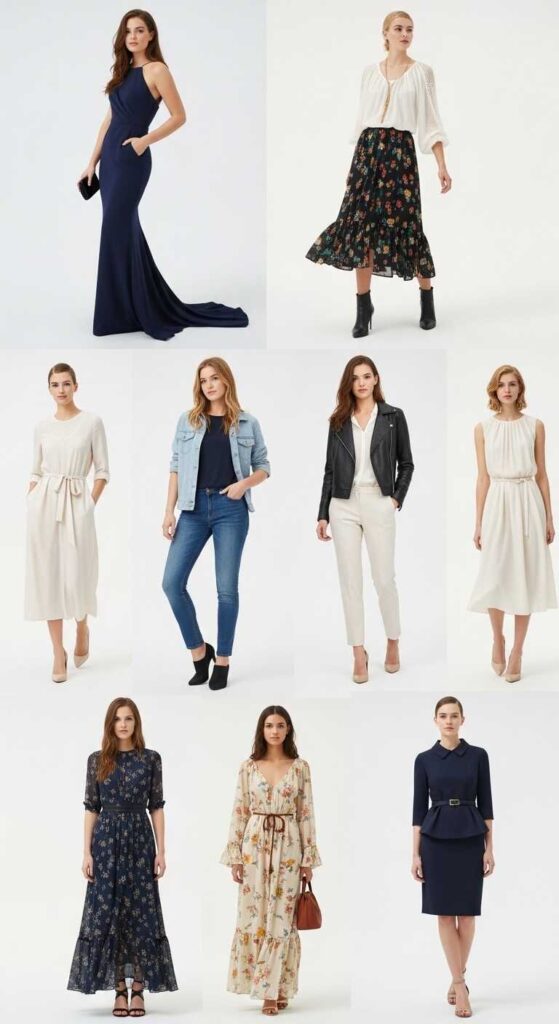
Elegant and Formal Style
Formal clothing for women includes dresses, skirts, blazers, trousers, and sophisticated tops suitable for office or events.
Key Elements:
- Tailored blazers and trousers
- Pencil skirts and sheath dresses
- Classic colors like black, navy, and beige
- Minimal, classy accessories
Tips:
- Opt for timeless pieces that can be worn across seasons.
- Quality fabrics like silk, wool, or cotton elevate your style.
Casual and Everyday Style
Casual fashion prioritizes comfort without sacrificing style. It includes jeans, casual tops, skirts, cardigans, and versatile footwear.
Key Elements:
- T-shirts, blouses, and tunics
- Denim or casual skirts
- Sneakers, flats, or ankle boots
- Layered outfits for dimension
Tips:
- Neutral basics paired with statement accessories create a chic everyday look.
- Mix patterns and textures for a playful casual outfit.
Read More About: Men Clothing Styles The Ultimate Guide to Modern Fashion and Personal Expression
Bohemian and Free-Spirited Style
Bohemian (boho) style is characterized by flowy fabrics, earthy tones, floral prints, and eclectic accessories.
Key Elements:
- Maxi dresses and skirts
- Loose tops and peasant blouses
- Fringe, beads, and layered jewelry
- Natural materials like cotton, linen, and leather
Tips:
- Embrace layering for an effortless boho vibe.
- Mix prints, but balance with neutral tones.
Vintage and Retro Fashion
Vintage style in women’s fashion draws inspiration from iconic eras, such as the 50s, 60s, 70s, and 80s. This includes high-waisted pants, polka dots, flared skirts, and retro accessories.
Tips:
- Accessorize with vintage bags, shoes, and jewelry.
- Pair classic pieces with contemporary items to avoid a costume-like look.
Unisex and Gender-Neutral Styles
Modern fashion increasingly embraces unisex or gender-neutral clothing, which prioritizes comfort, simplicity, and versatility. These styles include oversized shirts, hoodies, wide-leg pants, sneakers, and minimalistic accessories.
Tips:
- Focus on neutral tones and simple silhouettes.
- Layering is key to creating diverse looks with limited pieces.
- Unisex fashion encourages mixing traditionally “masculine” and “feminine” pieces.
Seasonal Adaptation of Clothing Styles
Fashion changes with the seasons, and adapting your clothing style ensures comfort while staying stylish.
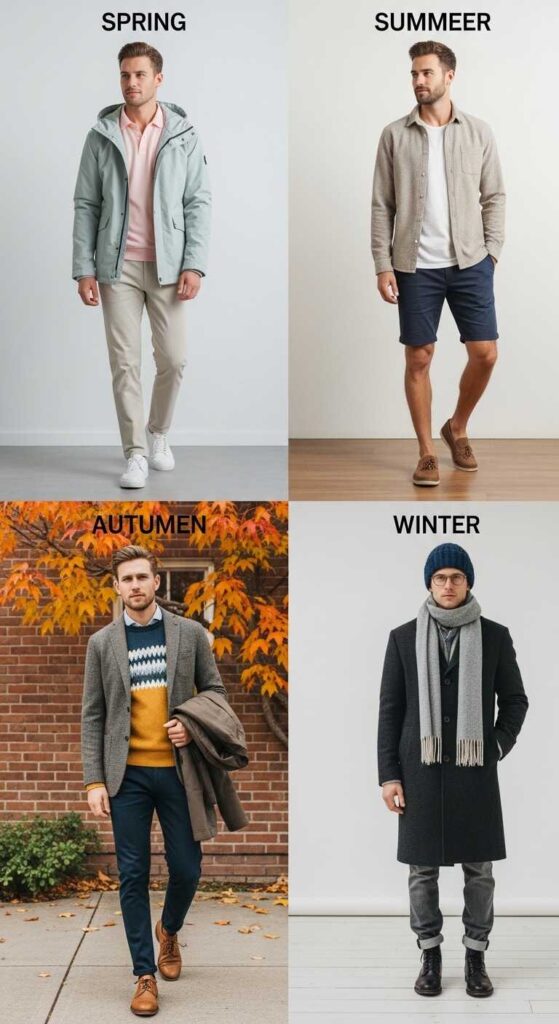
Spring
- Light jackets, cardigans, and trench coats
- Pastel colors and floral patterns
- Breathable fabrics like cotton and linen
Summer
- Shorts, skirts, sundresses, and t-shirts
- Light fabrics like cotton, silk, and linen
- Sandals and open-toe shoes for comfort
Autumn/Fall
- Layered outfits with sweaters, scarves, and jackets
- Warm colors: brown, orange, burgundy
- Boots and closed shoes for cooler weather
Winter
- Coats, parkas, and thermal layers
- Dark and neutral colors for sophistication
- Boots, gloves, and accessories for warmth
Building a Versatile Wardrobe
A versatile wardrobe allows you to mix and match pieces across different styles and occasions. The goal is to have timeless essentials alongside trendy items.
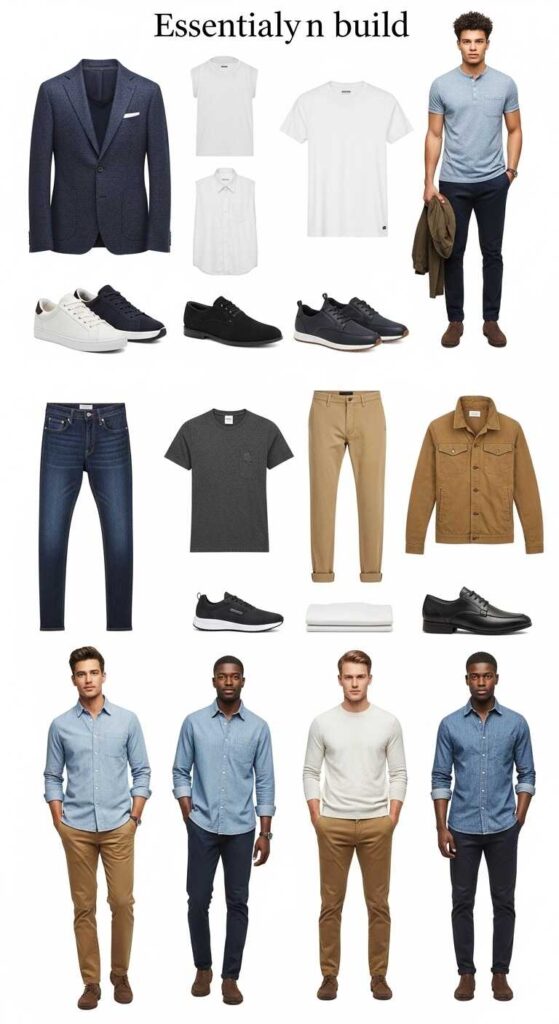
Essentials Include:
- White shirts and t-shirts
- Dark jeans and trousers
- Blazers and jackets
- Classic shoes (sneakers, loafers, boots)
- Statement accessories (scarves, belts, watches)
Tips:
- Invest in quality basics that last for years.
- Use statement pieces to update your look without overhauling your entire wardrobe.
- Keep seasonal rotation in mind to maximize versatility.
Popular Fashion Trends in Clothing Styles
Fashion trends evolve rapidly, but some have lasting impact:
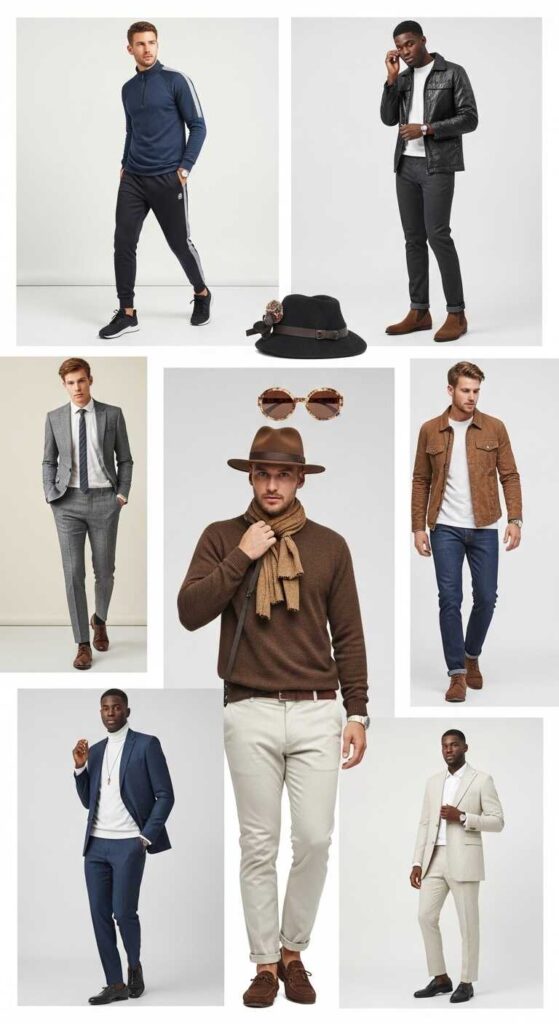
Athleisure: Comfortable athletic-inspired outfits for everyday wear.
Sustainable Fashion: Eco-friendly clothing made from recycled or organic materials.
Minimalism: Simple, clean lines and neutral tones for effortless style.
Bold Patterns and Colors: Vibrant prints, color blocking, and statement pieces.
Accessorizing and Personal Expression
Clothing styles are enhanced through accessories, which express personality and creativity.
Key Accessories:
- Watches, bracelets, and necklaces
- Hats, scarves, and bags
- Belts, shoes, and eyewear
Tips:
- Match accessories with the outfit style and occasion.
- Avoid over-accessorizing less is often more.
Tips for Choosing the Right Clothing Style
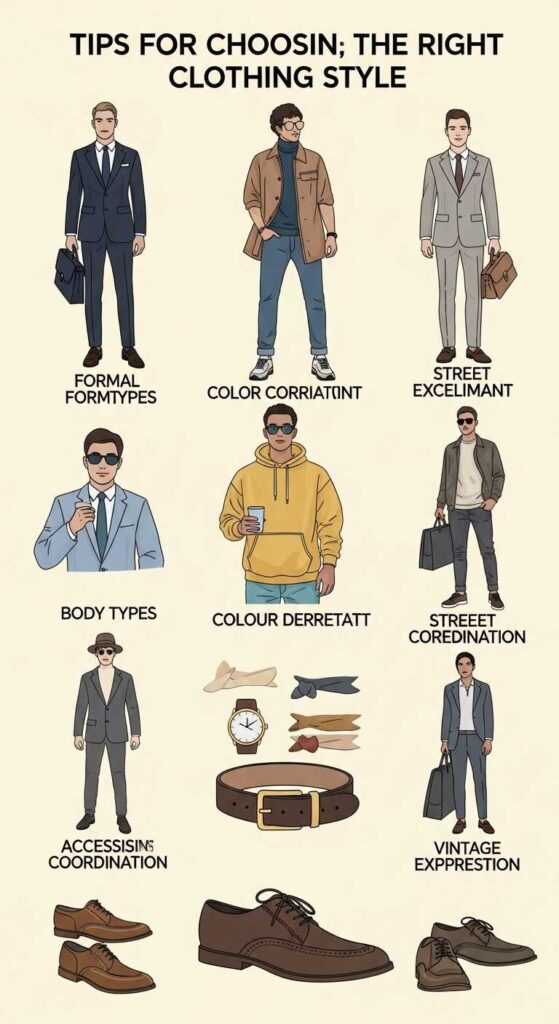
Know Your Body Type: Select clothing that flatters your shape.
Identify Your Color Palette: Choose colors that complement your skin tone.
Consider Occasion: Match your outfit to the setting, whether casual, professional, or formal.
Comfort Matters: Prioritize clothes that allow you to move freely.
Invest Wisely: Purchase quality pieces over fast fashion for long-term style.
Read More About: Long Curly Hair Men The Ultimate Guide to Style, Care, and Confidence
FAQs
What are the main types of clothing styles?
The main clothing styles include formal, casual, streetwear, vintage/retro, bohemian, athleisure, and gender-neutral/unisex fashion. Each style has distinct characteristics, suitable occasions, and ways to express personal style.
How do I choose the right clothing style for myself?
To choose the right style, consider your body shape, lifestyle, personality, and occasion. Experiment with different looks to see what makes you feel confident, comfortable, and authentic.
Can clothing styles be mixed?
Yes! Mixing clothing styles can create unique, personalized looks. For example, pairing vintage pieces with modern basics or combining streetwear with formal accessories adds creativity while maintaining balance.
What are the best clothing styles for work or office?
Classic formal or business-casual styles are ideal for work. Men can wear tailored suits or dress shirts with chinos, while women can opt for blazers, pencil skirts, tailored trousers, or sheath dresses. Neutral colors often work best in professional settings.
How can I update my wardrobe without buying everything new?
Focus on statement accessories, layering, and mixing basics with trends. Small additions like scarves, belts, shoes, or jackets can refresh your style without replacing your entire wardrobe.
Are clothing styles different for men and women?
Yes and no. Some styles are traditionally gendered, like skirts or tailored suits, but many styles today are gender-neutral or unisex, allowing anyone to express themselves freely. Trends like streetwear, athleisure, and minimalist fashion are popular for all genders.
How do seasonal changes affect clothing styles?
Seasons influence fabric choices, colors, and layering. For example:
- Summer: Lightweight fabrics like cotton, linen, bright colors
- Winter: Heavy coats, wool, darker tones
- Spring/Fall: Layering jackets, cardigans, transitional pieces
What are timeless clothing styles that never go out of fashion?
Timeless styles include:
- Classic suits and blazers
- White shirts and t-shirts
- Dark jeans or tailored trousers
- Simple dresses for women
- Neutral-colored shoes and bags
How important are accessories in clothing styles?
Accessories are essential as they enhance outfits, express personality, and complete a look. Watches, belts, scarves, hats, and jewelry can elevate both casual and formal outfits.
Can I combine different clothing styles in one outfit?
Absolutely! Combining styles like pairing athleisure with vintage jackets or formal shoes with casual jeans can create a balanced, fashion-forward look. The key is to maintain cohesion in color, texture, and fit.
Conclusion
Clothing styles are a reflection of individuality, culture, and personal expression. From timeless formal attire to casual comfort, vintage inspiration to modern streetwear, fashion is an endless playground for creativity.
Understanding your style preferences, adapting to seasons, and curating a versatile wardrobe ensures confidence, elegance, and authenticity in every outfit. Whether you are a man, woman, or exploring gender-neutral styles, mastering clothing styles is key to making a lasting impression and expressing yourself without words.


