

Business Casual Outfits for Men A Complete Guide
In the modern professional world, dressing well has become more than just a matter of appearance it’s a reflection of professionalism, personality, and attention to detail. Business casual attire strikes the perfect balance between formal office wear and relaxed everyday clothing. Unlike strict corporate suits, business casual outfits allow men to express style while maintaining a polished, professional appearance. This guide will explore everything you need to know about business casual outfits for men from wardrobe essentials and styling tips to seasonal considerations and grooming.
What Is Business Casual Outfits for Men?
Business casual is a dress code that blends traditional office wear with a more relaxed, comfortable aesthetic. It bridges the gap between formal business attire (suits and ties) and casual clothing (jeans and T-shirts). Business casual is versatile and adaptable to various professional settings, such as tech companies, creative industries, startups, and semi-formal corporate environments.
Key Features of Business Casual:
- Comfortable yet professional
- Clean and well-fitted clothing
- Neat, polished appearance
- Avoidance of overly casual items like ripped jeans, hoodies, or athletic sneakers
Business casual attire allows men to maintain credibility while being practical and stylish. It encourages experimenting with textures, patterns, and accessories while staying grounded in a professional appearance.
Essential Business Casual Wardrobe Pieces for Men
Building a strong business casual wardrobe requires investing in versatile pieces that can be mixed and matched. Here are the essentials:
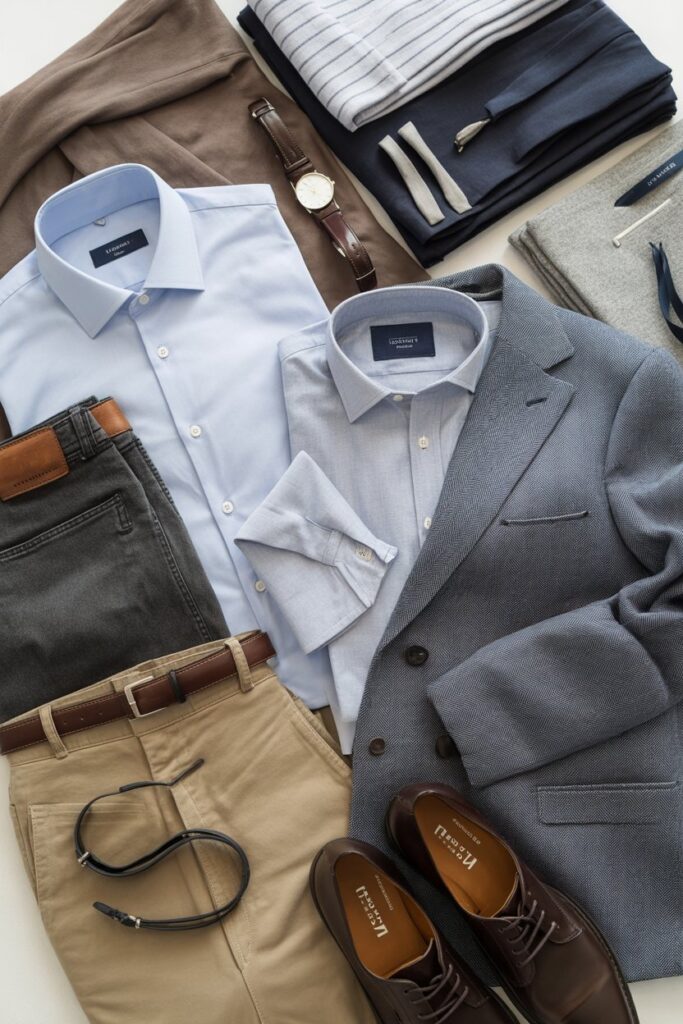
Shirts
Dress Shirts: Long-sleeve button-down shirts in solid colors like white, light blue, and pastel shades are staples. Stripes, subtle checks, and minimal patterns add versatility.
Polo Shirts: High-quality polo shirts offer a smart-casual look for more relaxed office settings. Neutral tones or muted colors work best.
Oxford Shirts: Known for their textured fabric and durability, Oxford shirts provide a refined yet approachable look.
Blazers and Jackets
A blazer instantly elevates any outfit. Opt for neutral colors such as navy, grey, or black. Lightweight, unstructured blazers work well for a relaxed vibe, while structured blazers give a more formal touch. Tweed or wool-blend blazers are ideal for fall and winter, while cotton or linen blazers are perfect for spring and summer.
Trousers and Chinos
Chinos: These are the backbone of business casual attire. Available in colors like khaki, navy, grey, and olive, chinos can be paired with both shirts and blazers.
Dress Pants: Slim or straight-fit dress pants in neutral shades offer a more polished option for client meetings or presentations.
Tailored Fit: Proper fit is crucial. Pants should be tailored to the length and waist without excessive looseness or tightness.
Jeans (Smart-Casual)
While not always recommended, dark-wash jeans with a clean finish can work for business casual environments. Avoid distressed or ripped styles. Pairing these jeans with a blazer or dress shirt ensures a professional appearance.
Footwear
Shoes can make or break a business casual look. Essential options include:
- Oxfords: Classic and timeless, suitable for formal-leaning business casual looks.
- Derby Shoes: Slightly less formal than Oxfords but still polished.
- Loafers: Comfortable yet stylish, perfect for a relaxed office.
- Chukka Boots: Versatile and trendy for fall and winter.
- Clean Sneakers: Minimalist leather or suede sneakers work in creative or startup environments.
Accessories
Accessories refine a business casual outfit and add personality:
- Belts: Match the belt with your shoes for a cohesive look.
- Watches: A classic wristwatch enhances professionalism.
- Ties: Optional in a business casual setting, but a knit or patterned tie adds a touch of sophistication.
- Bags: Leather or canvas messenger bags and briefcases are practical and stylish.
- Pocket Squares: A subtle pop of color in a blazer pocket can elevate the outfit.
Styling Business Casual Outfits
Styling business casual outfits requires understanding how to mix comfort with professionalism. Here are some practical tips:
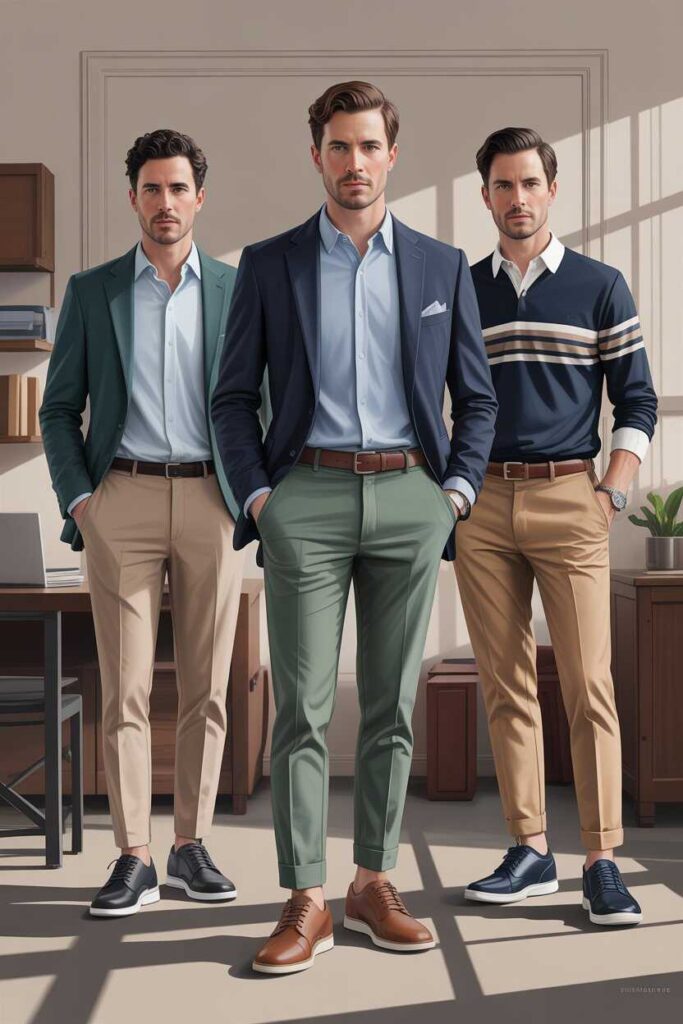
Layering
Layering adds depth and versatility to your outfit. Combine shirts with lightweight sweaters, cardigans, or blazers. For example:
- Autumn Look: A chambray shirt with a navy blazer and tan chinos.
- Winter Look: A turtleneck sweater under a grey blazer paired with dark trousers.
Mixing Colors and Patterns
Neutral colors like navy, grey, and beige form a solid base. You can add personality with subtle patterns or muted colors. Striped shirts, checked blazers, and patterned ties are excellent choices. Avoid loud, overly vibrant patterns that may clash with a professional setting.
Fit and Tailoring
Fit is non-negotiable in business casual outfits. Well-fitted clothing looks polished and exudes confidence. Common guidelines include:
- Shirt sleeves should end at the wrist bone.
- Blazers should hug the shoulders without tightness.
- Pants should break slightly at the shoe, without excess fabric pooling at the ankles.
Read More About:Business Casual Outfits for Men The Complete Guide
Smart Casual Combinations
- Navy blazer + white dress shirt + grey chinos + brown loafers
- Light blue Oxford shirt + khaki chinos + leather belt + brown derby shoes
- Polo shirt + dark trousers + minimalist sneakers
- Sweater over a collared shirt + chinos + chukka boots
These combinations provide a professional yet approachable appearance suitable for office environments, client meetings, or business lunches.
Seasonal Considerations
Adapting business casual outfits to the seasons ensures comfort and style throughout the year.
Spring and Summer
- Lightweight fabrics like cotton and linen
- Light colors like pastel blue, white, and beige
- Breathable shoes such as loafers or minimalist sneakers
Autumn and Winter
- Heavier fabrics like wool, tweed, and flannel
- Darker tones like navy, charcoal, and burgundy
- Layering with sweaters, scarves, and overcoats
Business Casual Outfits for Different Work Environments
Business casual dress codes may vary depending on the industry and company culture. Here’s how to adapt:

Corporate Office
- Stick to neutral colors and classic pieces.
- Pair dress shirts with blazers and dress shoes.
- Optional subtle accessories like watches or ties.
Startups and Creative Fields
- Flexibility in shirts and pants.
- Dark jeans or chinos with a casual blazer or sweater.
- Clean sneakers or casual loafers are acceptable.
Client-Facing Roles
- Lean more formal; blazers, dress shirts, and polished shoes.
- Minimal patterns and muted tones to maintain professionalism.
Grooming and Presentation
Business casual attire is not just about clothing. Grooming and overall presentation are equally important:
- Hair: Well-kept, neat hairstyles enhance a polished look.
- Beard and Facial Hair: Trimmed and maintained.
- Nails: Clean and manicured.
- Fragrance: Subtle, not overpowering.
- Posture: Confidence is reflected in how you carry yourself.
Common Business Casual Mistakes
Avoiding mistakes ensures that your outfit always reflects professionalism:
Overly Casual Clothing: Ripped jeans, T-shirts, hoodies, or athletic wear are not business casual.
Poor Fit: Baggy or tight clothing looks sloppy.
Excessive Accessories: Keep accessories minimal and tasteful.
Ignoring Footwear: Worn-out shoes can ruin an otherwise polished outfit.
Neglecting Grooming: Even the best outfit fails without proper grooming.
Building a Business Casual Capsule Wardrobe
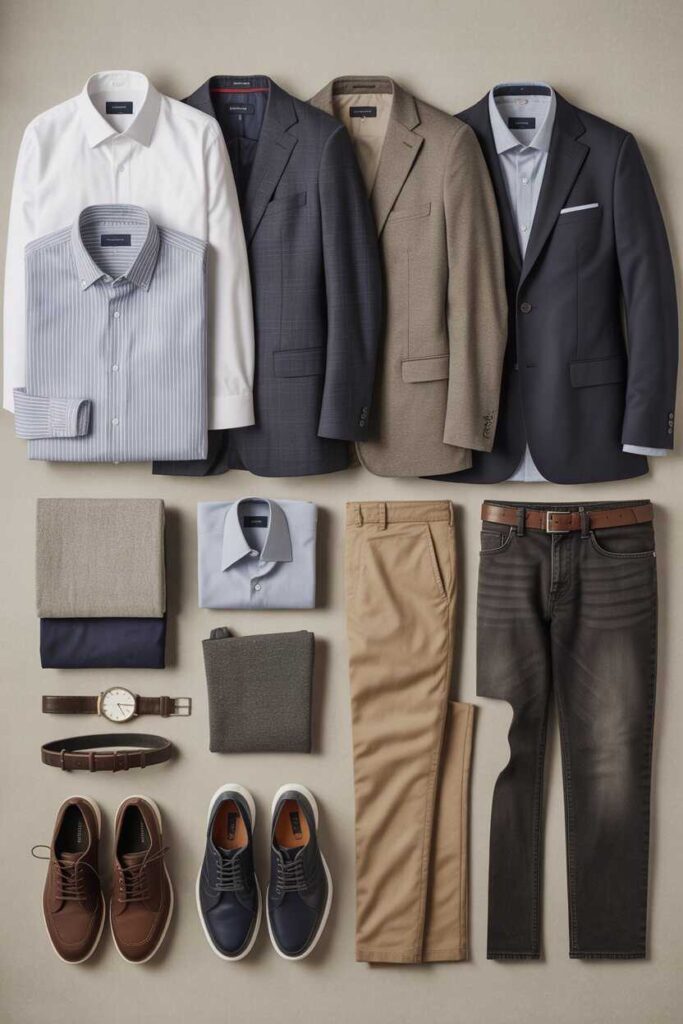
A capsule wardrobe includes versatile essentials that can be mixed and matched effortlessly. Consider including:
- 5–6 shirts (mix of dress, Oxford, and polo)
- 2–3 blazers (neutral colors)
- 3–4 trousers/chinos
- 1–2 pairs of dark jeans
- 3–4 pairs of shoes (Oxfords, loafers, minimal sneakers)
- 2–3 accessories (belts, watches, optional ties)
With these basics, you can create dozens of combinations for a polished business casual look every day.
Business Casual Outfit Ideas for Men
Here are some ready-to-wear outfit ideas:
Classic Look: White dress shirt + navy blazer + grey chinos + brown Oxford shoes
Smart-Casual Friday: Light blue Oxford shirt + dark jeans + brown loafers
Creative Office: Polo shirt + khaki chinos + minimalist sneakers
Winter Business Casual: Grey turtleneck + charcoal blazer + black trousers + black derby shoes
Summer Vibes: White linen shirt + beige chinos + brown loafers + leather watch
Shopping Tips for Business Casual Clothing
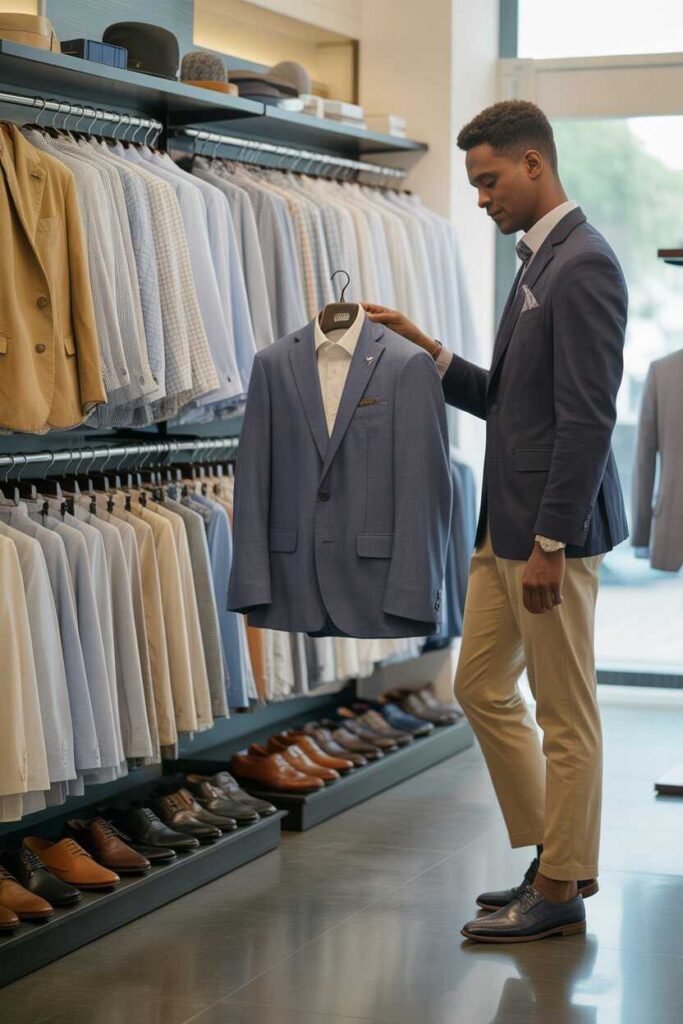
- Invest in quality pieces; they last longer and maintain appearance.
- Choose neutral colors for versatility.
- Always try on clothes or check sizing charts for an accurate fit.
- Consider online and in-store shopping for a wider selection.
- Mix high-quality staples with affordable fashion for balance.
Caring for Business Casual Clothing
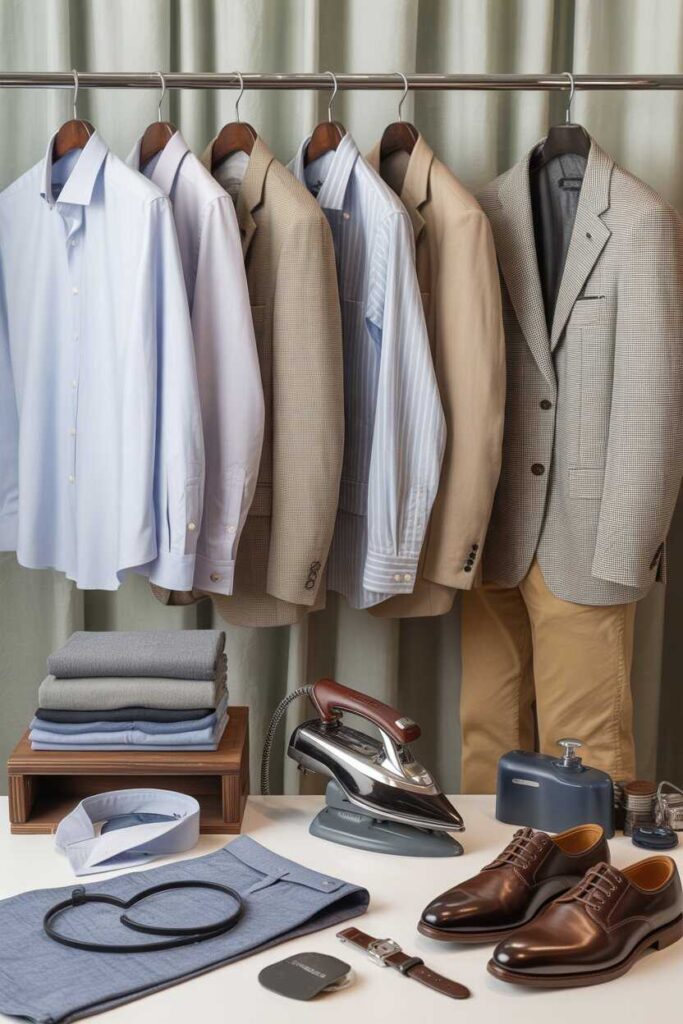
Proper care ensures longevity and a polished look:
- Shirts: Wash and iron as per fabric instructions; hang to avoid wrinkles.
- Blazers: Dry clean only when necessary; use a lint roller.
- Shoes: Polish leather shoes regularly; clean sneakers.
- Trousers/Chinos: Wash in cold water; avoid excessive ironing.
- Storage: Use proper hangers for shirts and jackets; fold knitwear to avoid stretching.
Benefits of Wearing Business Casual Outfits

- Professional Appearance: Maintains credibility and authority.
- Comfort: Balances formal attire with practical, comfortable clothing.
- Versatility: Can be adapted to various work and social settings.
- Style Expression: Allows personal style without compromising professionalism.
- Confidence Boost: A well-dressed man exudes confidence and competence.
Read More About:Vintage Outfits for Men A Comprehensive Guide to Timeless Style
FAQs
Can I wear jeans for business casual?
Yes, dark, clean, and well-fitted jeans are acceptable in many business casual settings, especially in creative or tech industries. Avoid ripped or faded jeans.
Do I need a tie for business casual?
Ties are optional in business casual attire. A tie can enhance the look for meetings but is not always required.
What shoes are best for business casual?
Leather Oxfords, loafers, Derby shoes, chukka boots, and minimalist sneakers are all suitable options.
How can I make my business casual outfits more stylish?
Pay attention to fit, layering, subtle patterns, and accessories. A well-fitted blazer or quality watch can elevate your look.
Are polo shirts acceptable for business casual?
Yes, polo shirts in neutral or muted tones are appropriate for many business casual settings, especially in warmer weather.
Conclusion
Business casual outfits for men offer the perfect balance between professionalism and comfort. By understanding essential wardrobe pieces, mastering styling techniques, adapting to seasons, and paying attention to grooming, any man can create a polished, versatile look.
Investing in quality staples, maintaining proper care, and avoiding common mistakes ensures that business casual outfits remain stylish, professional, and adaptable for years to come. Whether in a corporate office, a startup environment, or client-facing role, mastering business casual attire is an investment in both appearance and confidence.


