

Vintage Outfits for Men A Comprehensive Guide to Timeless Style
Fashion is cyclical. What was once considered outdated often resurfaces with renewed appeal, particularly in the realm of vintage clothing. For men, vintage outfits aren’t just about nostalgia they’re about making a statement, exuding character, and embracing timeless elegance. Whether you’re a fashion enthusiast or simply someone looking to stand out, vintage outfits for men offer a unique way to express individuality while staying effortlessly stylish.
In this guide, we’ll explore the origins of vintage fashion, essential wardrobe pieces, styling tips, and how to incorporate vintage outfits into modern-day wardrobes.
Vintage Outfits for Men Understanding Vintage Fashion
Vintage fashion refers to clothing, accessories, and styles that are at least 20–30 years old. Unlike retro fashion, which replicates past trends, vintage pieces are authentic and often carry historical significance.
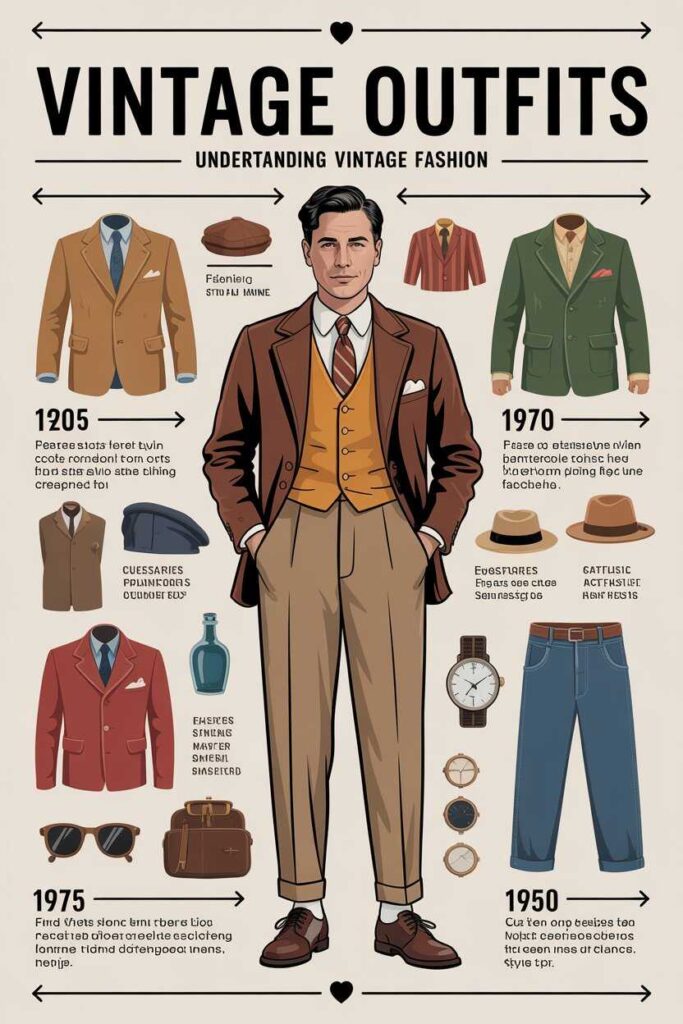
Men’s vintage fashion spans several iconic eras, including:
1920s – The Roaring Twenties: Known for dapper suits, suspenders, and fedora hats. Men’s fashion in this era emphasized sharp tailoring and elegant detailing.
1930s–1940s – Classic Elegance: Think double-breasted suits, wide lapels, and formal accessories like pocket watches. Utility and practicality were key during wartime, but style was never completely sacrificed.
1950s – Rock ‘n’ Roll Influence: Leather jackets, denim jeans, and varsity sweaters became popular. The era celebrated rebellion and youthful energy.
1960s–1970s – Bold Colors and Patterns: From mod suits to bohemian styles, this era experimented with vibrant colors, floral prints, and flared trousers.
1980s – Power Dressing: Shoulder pads, bold prints, and tracksuits reflected the era’s focus on assertiveness, luxury, and athleticism.
1990s – Minimalism and Grunge: Oversized flannels, baggy jeans, and casual streetwear characterized the grunge movement, while minimalist aesthetics favored neutral tones and simple cuts.
Each era brought something unique, and understanding the historical context can help men make informed choices when building a vintage-inspired wardrobe.
Essential Vintage Wardrobe Pieces for Men
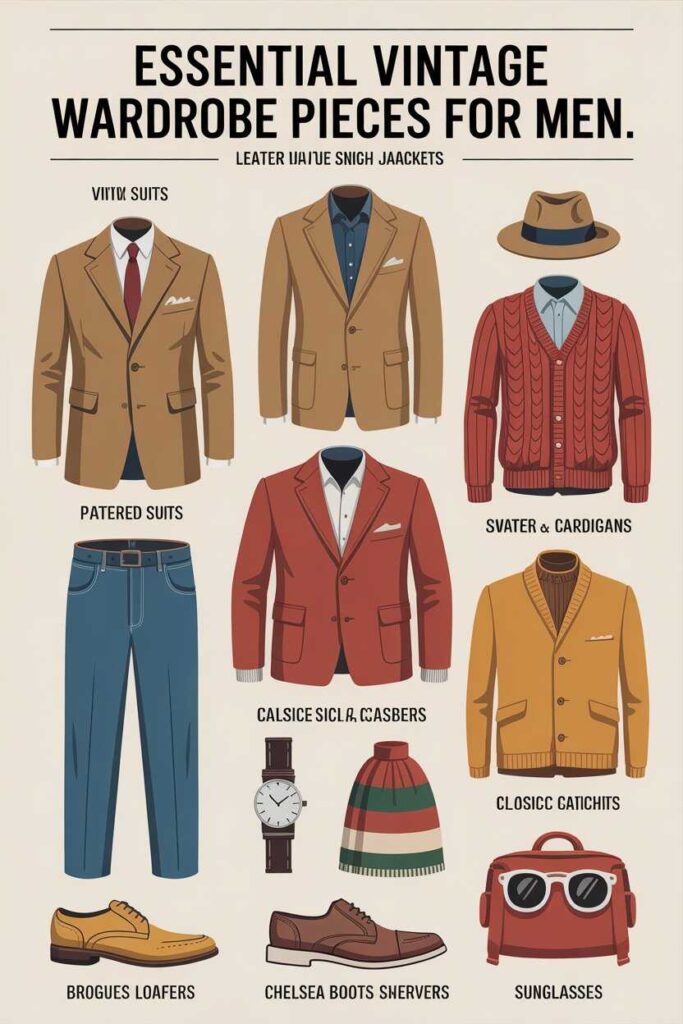
A successful vintage outfit starts with a carefully curated wardrobe. Here are some essential pieces every man should consider:
Vintage Suits
A well-tailored suit can instantly elevate your look. Opt for double-breasted suits, pinstripes, or tweed options depending on the era you’re inspired by. Pair with a crisp dress shirt and a classic tie for a timeless appearance.
Styling Tip: If wearing a vintage suit feels too formal for everyday wear, break it up with casual elements like a t-shirt or sneakers for a contemporary twist.
Leather Jackets
Leather jackets are a staple for rock-inspired or 1950s vintage looks. A classic bomber or biker jacket adds edge and personality to any outfit.
Styling Tip: Pair with dark denim and boots for an effortlessly cool look reminiscent of Marlon Brando’s iconic style.
Denim Jeans
High-waisted or straight-leg jeans are perfect for vintage-inspired outfits. Raw denim or lightly distressed options work well for casual ensembles.
Styling Tip: Roll up the hems for a retro vibe, especially when paired with loafers or classic sneakers.
Shirts and T-Shirts
From patterned button-downs to basic white tees, shirts are versatile pieces for vintage looks. Hawaiian prints, polka dots, and striped designs were particularly popular in the mid-20th century.
Styling Tip: Layer a patterned shirt under a cardigan or vintage blazer for a balanced, stylish outfit.
Sweaters and Cardigans
Chunky knit sweaters, argyle patterns, and wool cardigans add warmth and character to vintage outfits. They work especially well in 1960s–1970s-inspired looks.
Styling Tip: Combine with tailored trousers and loafers to achieve a smart-casual ensemble.
Footwear
Shoes are crucial for completing any vintage outfit. Key options include:
- Brogues and oxfords for classic elegance
- Loafers for mid-century sophistication
- Chelsea boots for mod-inspired looks
- Sneakers like Converse or Vans for 1950s–1990s casual outfits
Styling Tip: Matching footwear to your era of inspiration can reinforce the authenticity of your vintage ensemble.
Accessories
Accessories are the final touch that makes a vintage outfit truly stand out. Consider adding:
- Fedora or trilby hats for a 1920s–1940s vibe
- Pocket watches and suspenders for formal outfits
- Scarves and gloves for colder months
- Vintage sunglasses like aviators or wayfarers
Styling Tip: Accessories should complement, not overwhelm. Stick to one or two key pieces for a polished look.
Read More About:Japanese Fashion Men A Complete Guide to Style, Trends, and Culture
Styling Vintage Outfits for Modern Men
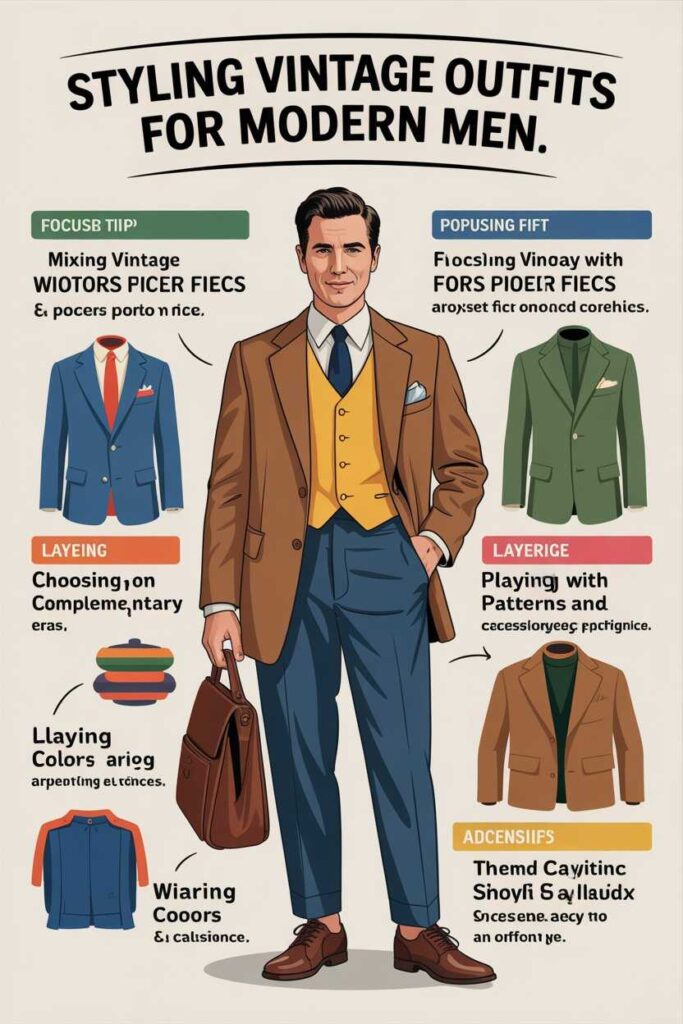
Incorporating vintage pieces into contemporary wardrobes requires balance. Here’s how to master the art:
Mix Vintage with Modern Basics
Pair vintage jackets, shirts, or trousers with modern essentials. For example, a 1970s patterned shirt looks fresh when paired with slim-fit chinos and contemporary sneakers.
Pay Attention to Fit
Older clothing tends to have different sizing standards. Tailoring may be necessary to ensure a proper fit. A well-fitted vintage suit or jacket instantly enhances style credibility.
Stick to a Theme
Focus on a particular era to maintain cohesiveness. Mixing too many periods can result in a chaotic look. For instance, pairing 1950s leather jackets with 1980s shoulder-padded blazers may feel disjointed.
Experiment with Layering
Layering adds depth and versatility to vintage outfits. Combine vests, cardigans, or scarves with shirts and jackets for a sophisticated and multi-dimensional appearance.
Play with Colors and Patterns
Vintage fashion is often associated with bold colors and patterns. Don’t be afraid to incorporate stripes, plaids, or floral prints. Keep one statement piece per outfit to avoid overwhelming the look.
Confidence is Key
Vintage outfits require confidence. Wearing classic pieces with pride makes any outfit more impactful. Body language, posture, and attitude are just as important as clothing.
Vintage Outfit Ideas for Men
Here are some complete outfit ideas to inspire your vintage wardrobe:
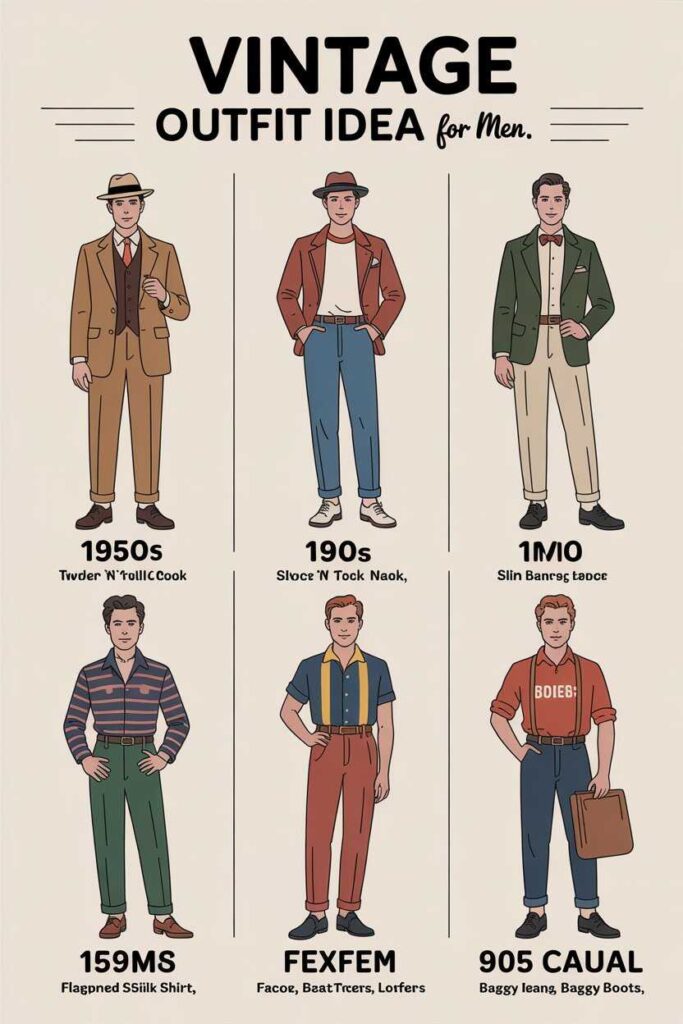
1920s Inspired Dapper Look
- Double-breasted tweed suit
- Crisp white dress shirt
- Silk tie with a subtle pattern
- Brown leather oxford shoes
- Fedora hat
Perfect for formal events or parties with a classic theme.
1950s Rock ‘n’ Roll Casual
- Black leather biker jacket
- White crew-neck t-shirt
- Dark straight-leg jeans
- Black boots or Converse sneakers
- Aviator sunglasses
Ideal for casual outings or music-inspired gatherings.
1960s Mod Style
- Slim-fit tailored blazer
- Patterned button-down shirt
- Narrow trousers
- Chelsea boots
- Thin tie (optional)
Great for evenings out or smart-casual events.
1970s Bohemian Ensemble
- Patterned silk shirt
- Flared trousers
- Brown suede loafers
- Layered necklaces
- Oversized sunglasses
Perfect for music festivals or creative social events.
1990s Grunge Casual
- Oversized flannel shirt
- Band t-shirt
- Baggy jeans or cargo pants
- Combat boots or sneakers
- Beanie hat
Ideal for laid-back weekends or casual city strolls.
Shopping for Vintage Clothing
Finding authentic vintage pieces requires patience and strategy. Here’s where to start:
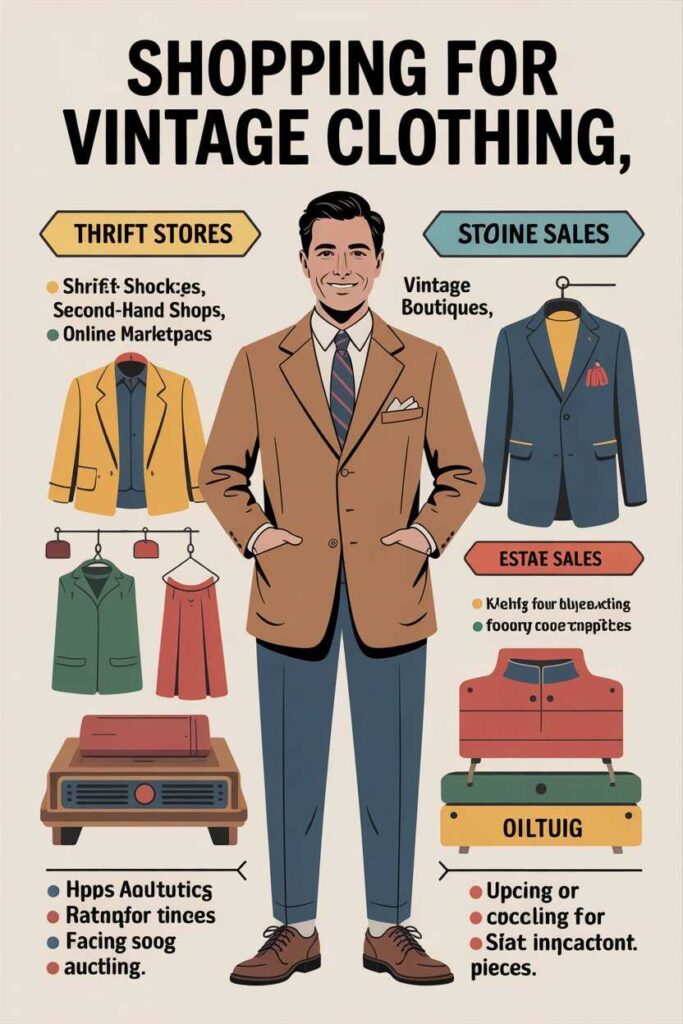
Thrift Stores and Second-Hand Shops
Thrift stores often carry hidden gems at affordable prices. Look for quality fabrics, unique patterns, and well-preserved pieces.
Online Marketplaces
Websites like Etsy, eBay, and specialized vintage stores offer curated selections. Check seller reviews and product photos carefully.
Vintage Boutiques
Boutiques focus on high-quality vintage items, often curated by era and style. While pricier, the authenticity and condition of the items are usually superior.
Estate Sales and Auctions
Estate sales can yield rare vintage finds, including designer suits, leather jackets, and classic accessories.
Upcycling and Customization
If you find a vintage piece that needs minor adjustments, a tailor can help modify it to fit perfectly while preserving its original charm.
Caring for Vintage Outfits
Vintage clothing is an investment and requires proper care:
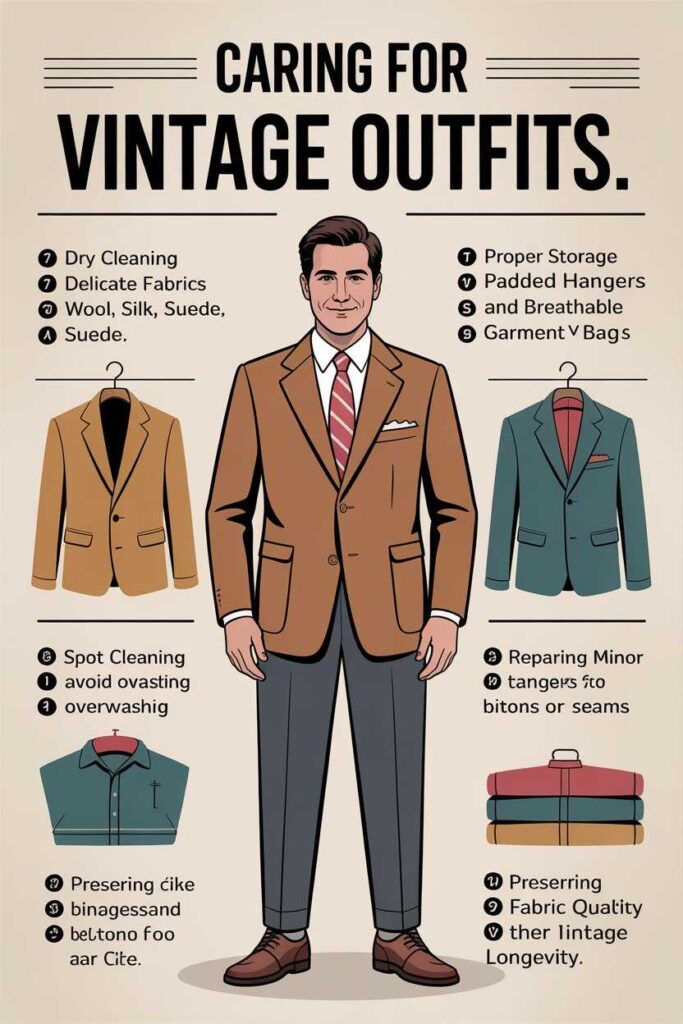
Dry Clean When Necessary: Delicate fabrics like wool, silk, and suede benefit from professional cleaning.
Store Properly: Use padded hangers for suits and jackets. Keep clothing in breathable garment bags to prevent dust and mildew.
Repair with Care: Minor repairs, such as re-stitching buttons or fixing seams, prolong the life of vintage pieces.
Avoid Overwashing: Overwashing can weaken fabric fibers. Spot clean when possible.
Benefits of Wearing Vintage Outfits
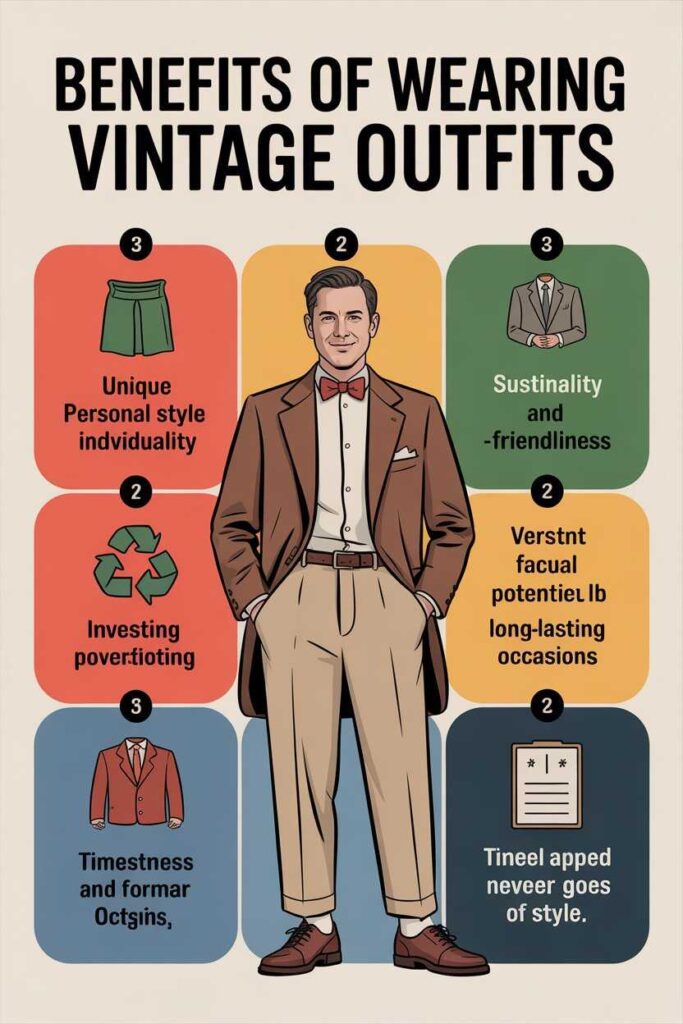
Unique Style: Vintage clothing allows men to stand out from the crowd.
Sustainability: Buying vintage is eco-friendly and reduces fast-fashion waste.
Investment Potential: High-quality vintage pieces can increase in value over time.
Versatility: Vintage items can be dressed up or down depending on the occasion.
Timeless Appeal: Classic silhouettes and fabrics never truly go out of style.
Common Mistakes to Avoid
- Over-accessorizing: Too many hats, watches, or scarves can overwhelm an outfit.
- Ignoring Fit: A poorly fitting vintage suit or jacket can look sloppy.
- Mixing Eras Haphazardly: Stick to one or two eras per outfit for cohesion.
- Neglecting Footwear: Shoes should complement the vintage aesthetic.
Read More About:Business Casual Outfits for Men The Complete Guide
FAQs
What defines a vintage outfit for men?
A vintage outfit typically consists of authentic clothing, accessories, and styles that are at least 20–30 years old. Unlike retro fashion, which imitates past trends, vintage clothing is original and often carries historical significance.
Which eras are most popular in men’s vintage fashion?
Some of the most iconic eras include:
- 1920s: Dapper suits, suspenders, and fedoras
- 1950s: Leather jackets, denim, and varsity sweaters
- 1960s–1970s: Bold patterns, flared trousers, and bohemian styles
- 1980s: Power suits and statement tracksuits
- 1990s: Grunge fashion, oversized flannels, and minimalist streetwear
How do I incorporate vintage clothing into modern outfits?
The key is balance. Pair vintage pieces like jackets or shirts with modern basics such as slim-fit jeans, contemporary sneakers, or neutral t-shirts. Mixing eras cautiously and focusing
Where can I buy authentic vintage clothes for men?
- Thrift stores and second-hand shops
- Online marketplaces like Etsy or eBay
- Vintage boutiques
- Estate sales and auctions
How should I care for vintage clothing?
- Dry clean delicate fabrics like wool, silk, and suede
- Store suits and jackets on padded hangers
- Use breathable garment bags to prevent dust and mildew
- Repair minor damages to prolong life
- Avoid overwashing; spot clean when possible
What are some essential vintage wardrobe pieces for men?
- Suits (tweed, pinstripe, double-breasted)
- Leather jackets and bomber jackets
- Denim jeans (high-waist, straight-leg)
- Patterned or basic shirts
- Sweaters and cardigans (argyle, wool)
- Footwear: brogues, loafers, Chelsea boots, classic sneakers
- Accessories: hats, watches, scarves, sunglasses
Can vintage clothing fit into casual everyday wear?
Yes! Vintage clothing can be adapted for casual looks by combining items like leather jackets, vintage t-shirts, denim, and sneakers. Layering and pairing with modern essentials make vintage styles practical for everyday wear.
How do I choose the right vintage outfit for my body type?
- Slim builds: Tailored vintage suits, narrow trousers, and fitted shirts
- Athletic builds: Layered shirts, jackets, and slightly relaxed trousers
- Larger builds: Structured jackets, straight-leg trousers, and darker colors to create a slimming effect
Is vintage fashion sustainable?
Absolutely! Wearing vintage clothing reduces demand for new garments, promotes recycling, and lowers the environmental impact associated with fast fashion.
Can I mix multiple vintage eras in one outfit?
It’s possible, but it requires caution. Stick to complementary eras or subtle elements to avoid a mismatched appearance. One statement piece per outfit is usually best.
Conclusion
Vintage outfits for men are more than just clothing they are an expression of individuality, history, and timeless style. By understanding different eras, investing in essential wardrobe pieces, and combining vintage items with modern basics, men can create versatile and stylish outfits that never go out of fashion.
Whether you’re dressing for a casual day out, a formal event, or a creative gathering, vintage fashion offers endless possibilities. From the tailored elegance of the 1920s to the rebellious spirit of the 1990s, embracing vintage style allows men to stand out while honoring the rich history of fashion.


